
Sounds of Care
Sounds of care
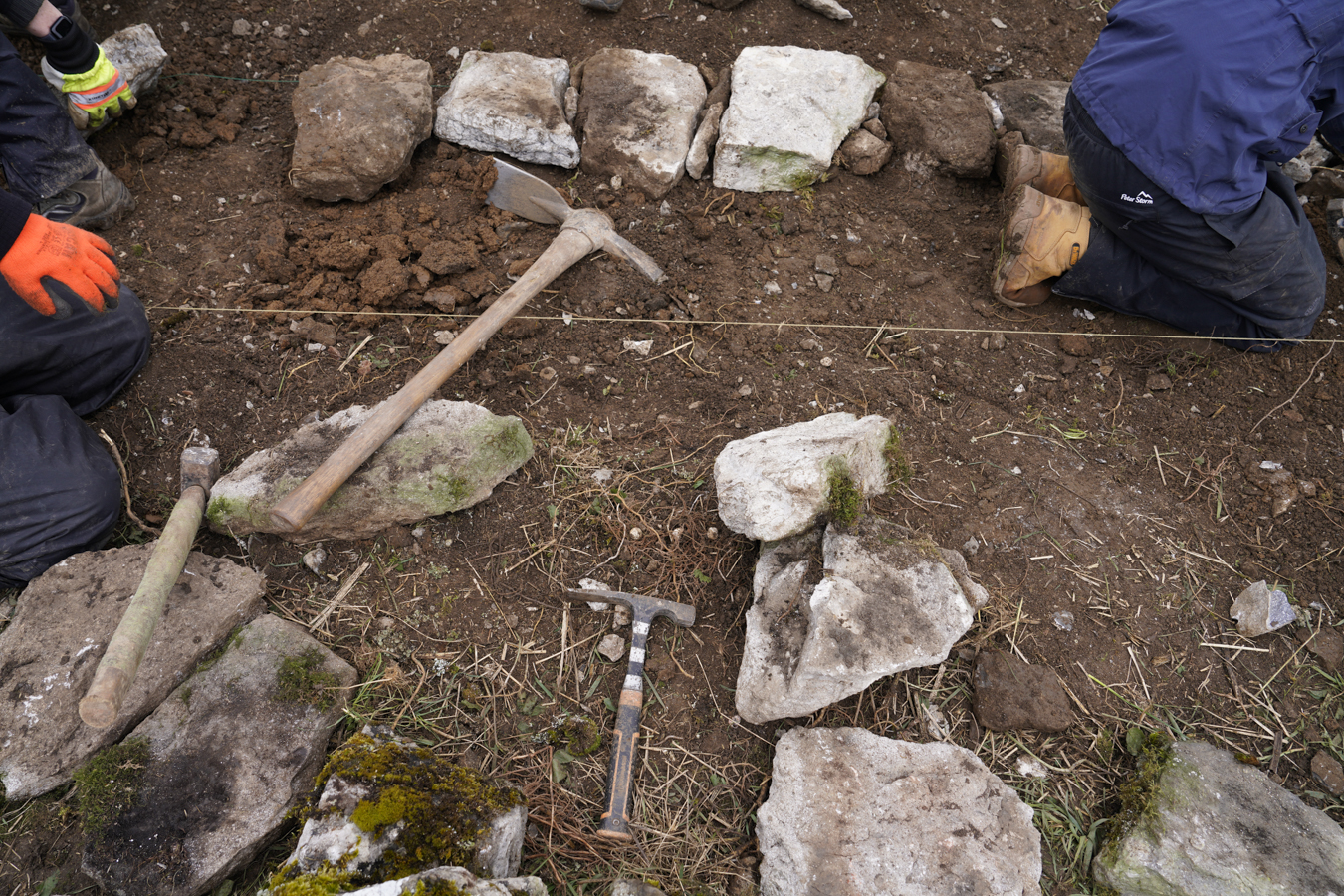
Whether the drop and clink of hearting stones against muffled conversation, the power of the wind, or the earthy sound of the mattock in the soil, the soundscapes of dry stone walling can’t help but situate us in the landscape – but in a timeless, meditative, way.
You are invited to explore the unedited soundscapes of a walling weekend in Priddy, Mendips.
This series of clips explore the combination, or collaboration of sounds and elements that celebrate the process of dry stone walling and the sounds of human hands on stone.
The wind and weather have been not edited out, as the experience and process cannot be considered seperate from the context.
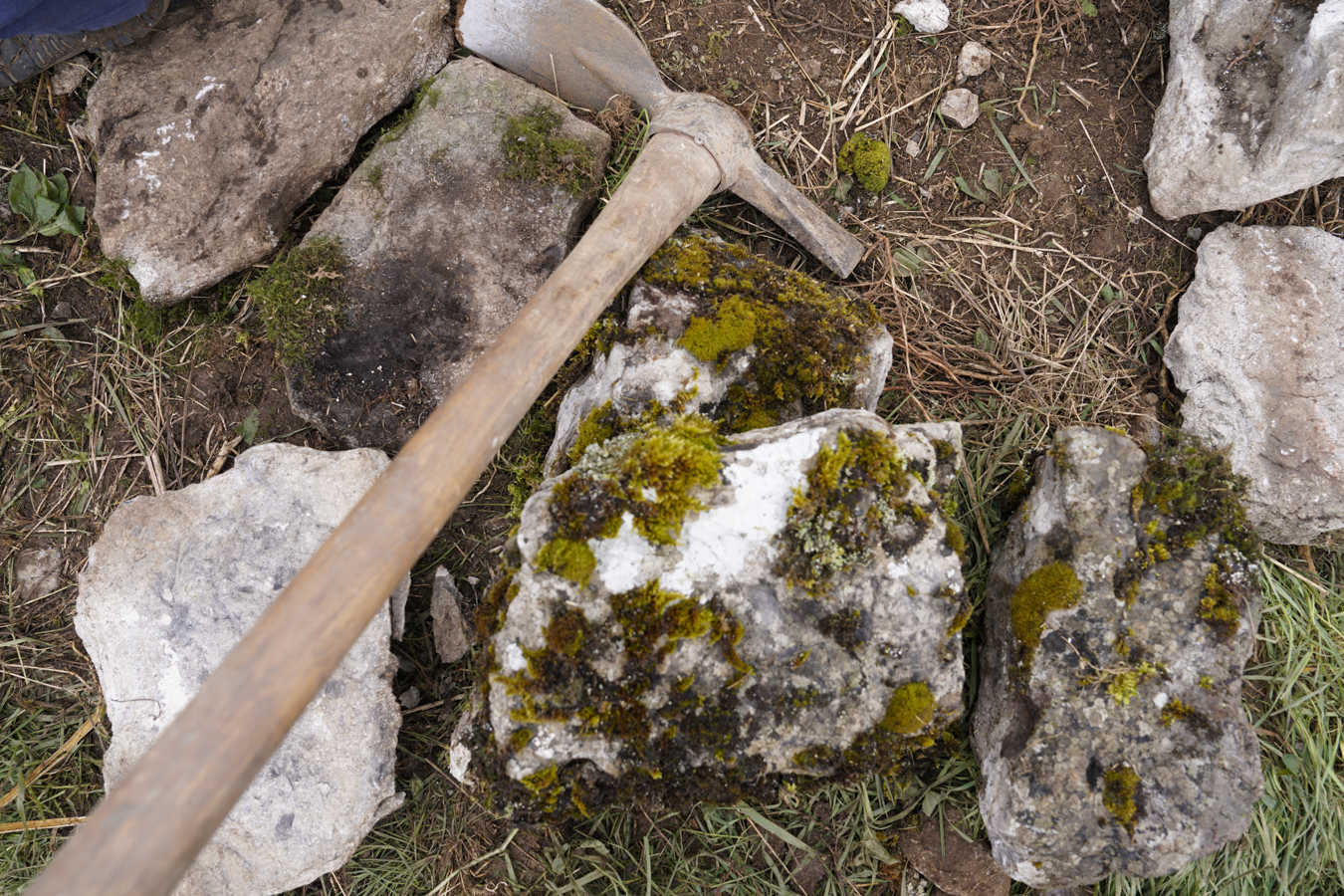
Preparing the foundations - Mattock
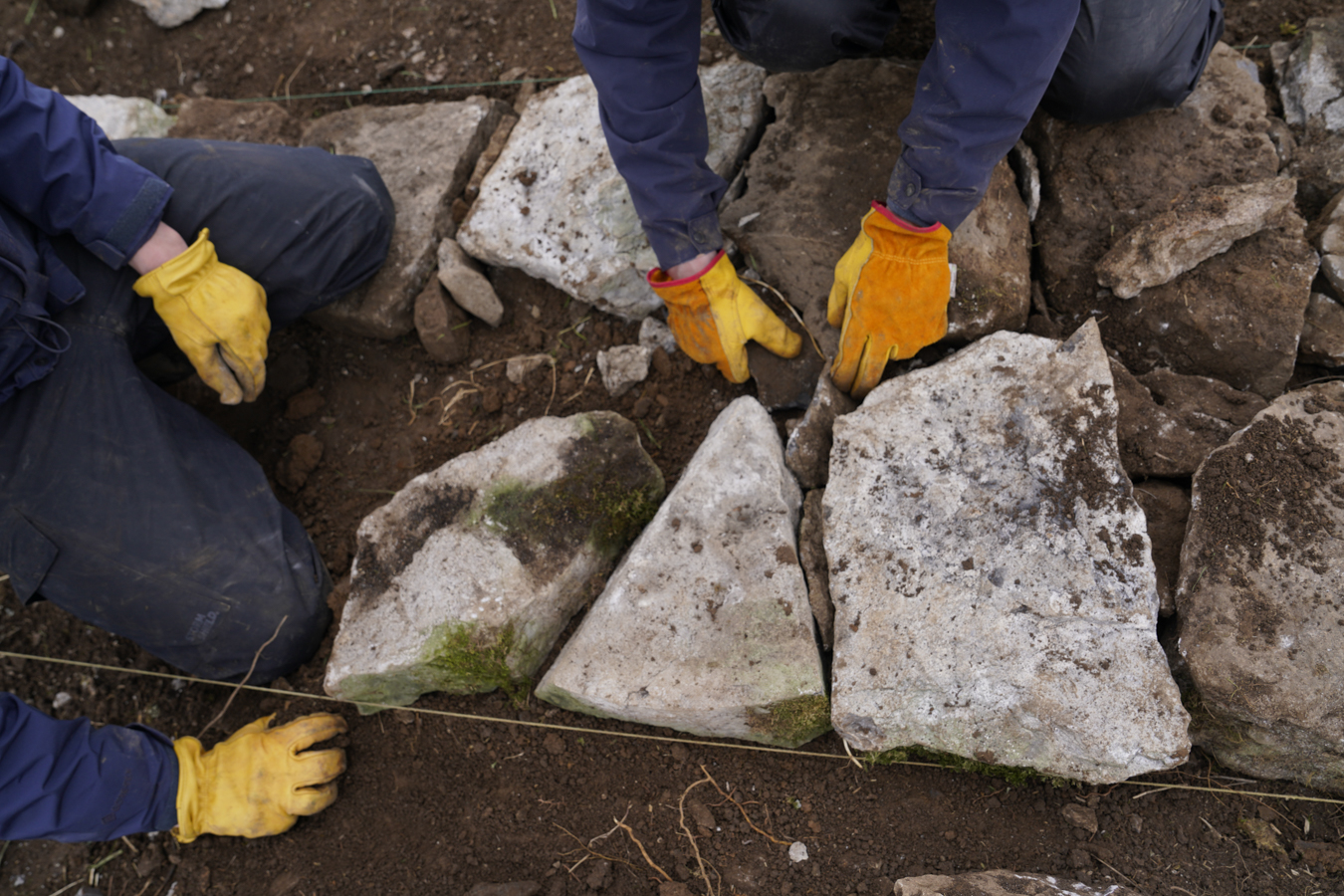
"Watch that string line"
Hearting drop
'Infill ' - Muffled conversation
“watch that string line”
Common phrases and conversation when working collaboratively as a team to build a wall include:
“watch that string line”
“What do you think about that?”
“Pass the hearting please”
“Can you make use of this one?”
“Can’t find the right throughstone”
“How is this level at that side?”
“try that one”
“dust in my eye”
“That’s snug”
“That’s a nice looking stone”
‘
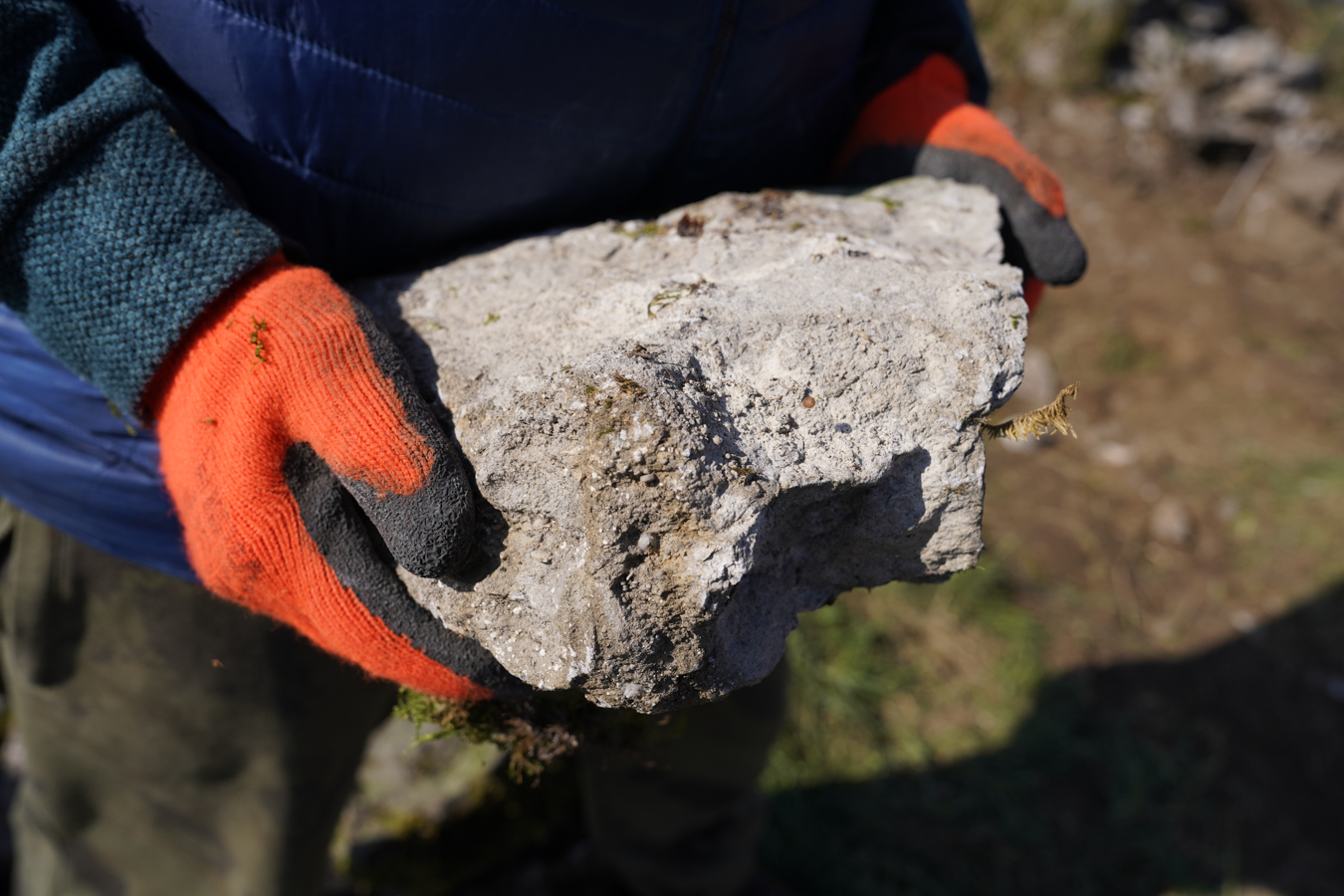
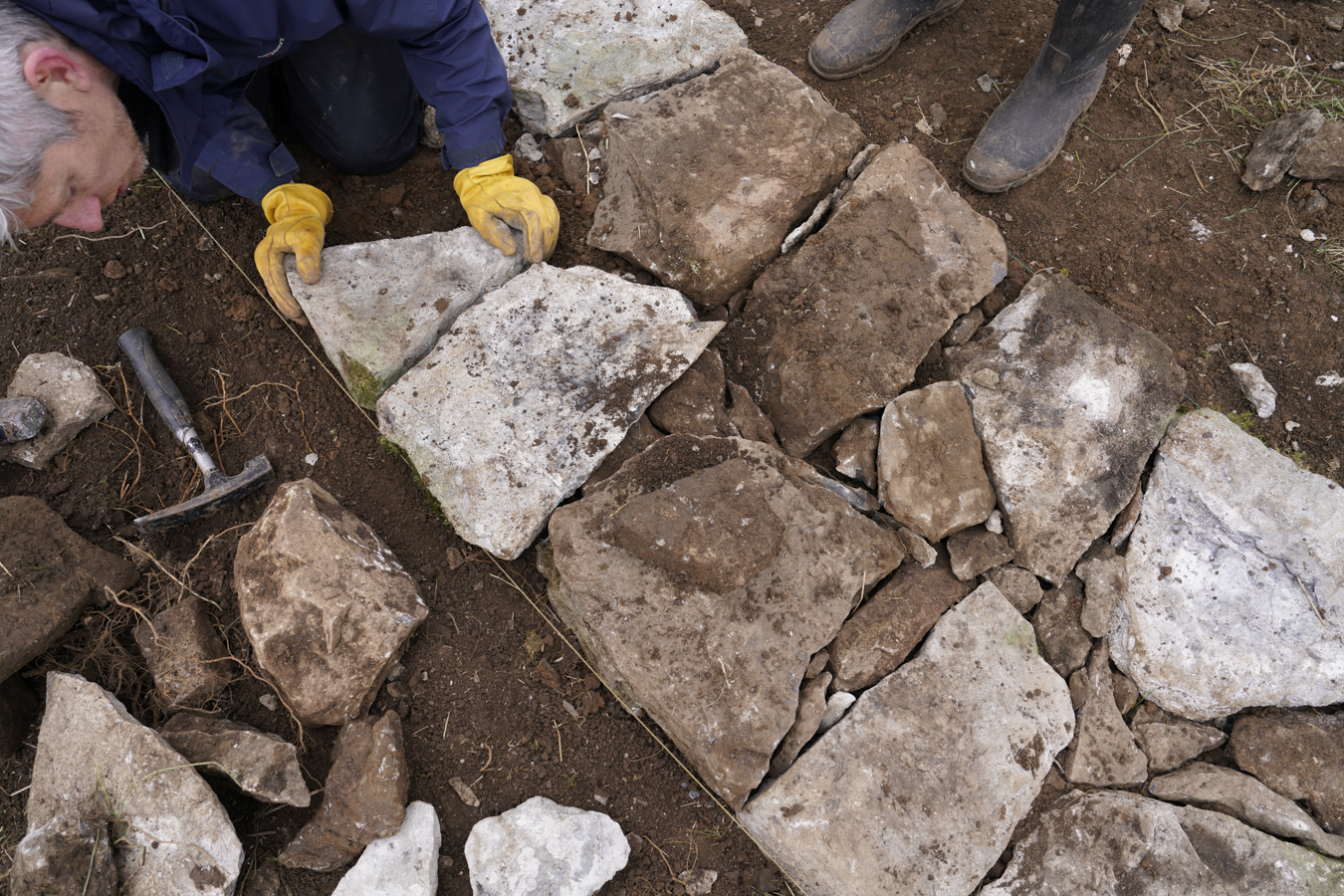
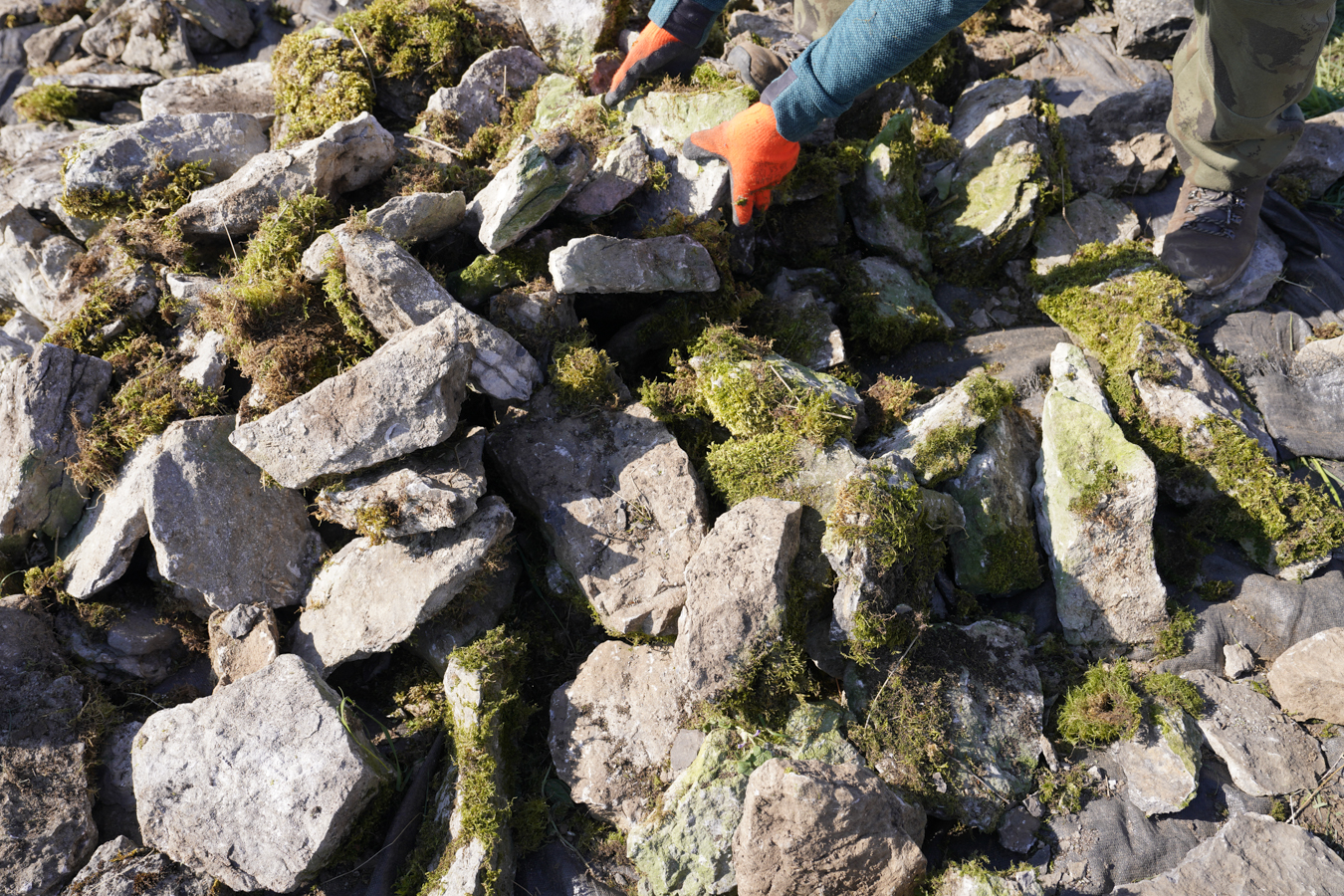
Hearting drop with wind
Pick and wind
About
Summary
Dry stone walls are a defining feature of the Mendip Hills landscape—but just how vital are they, and to whom?
From skilled wallers and ecologists to landowners and local councillors, many groups have a vested interest in the future of dry stone walling. While all share a commitment to caring for the walls and the wider landscape, their approaches to care and repair often diverge.
How should we rebuild a broken wall? is an action research project that explores these differing perspectives. Through conversations and collaboration with dry stone wallers and other key stakeholders, the project seeks to understand the values, priorities, and tensions that shape decisions about wall repair in the Mendip Hills Area of Outstanding Natural Beauty (AONB).
Building on the insights from the 2008 Lifelines Project Report by the AONB Partnership, this project aims to celebrate diverse approaches to care—whether dry stone walls are seen as tools for livestock management, cultural heritage assets, or vital habitats for flora, fauna, and endangered wildlife.
Ultimately, this project asks:
Can a shared approach to care and repair be found through acts of celebration—one that respects all these values and secures the future of the craft, the landscape, and its ecosystems?
An invitation to engage
Phase One of this project focused on listening and gathering, working closely with the dry stone walling communities of the Mendip Hills over several months.
Now, you’re invited to explore the outcomes of this phase by clicking through the individual ‘stones’ in this digital publication—each one containing field notes, reflections, and research gathered so far.
As we move into Phase Two, the aim is to broaden the conversation. We’re inviting ecologists, landowners, and local councillors based in the Mendips to contribute their own perspectives and stories of care.
Whether you’re a dry stone waller or part of a different community connected to this landscape, we welcome your voice. You can share stories, experiences, or images directly through the website using the ‘Share My Story’ stone.
All contributions will remain anonymous unless you choose otherwise. Visit the ‘Share My Story’ stone for full details.
What this is not
This is not a manifesto, policy document, a survey or a scientific report.
This project has been guided by artist-researcher Georgina Bolton and has emerged from a Masters in Art and Social Practice from the University of the Highlands and Islands (UHI), Scotland, UK.
The discrepancy in approaches to care and repair as a topic for discussion was first brought forward by the dry stone walling community themselves.
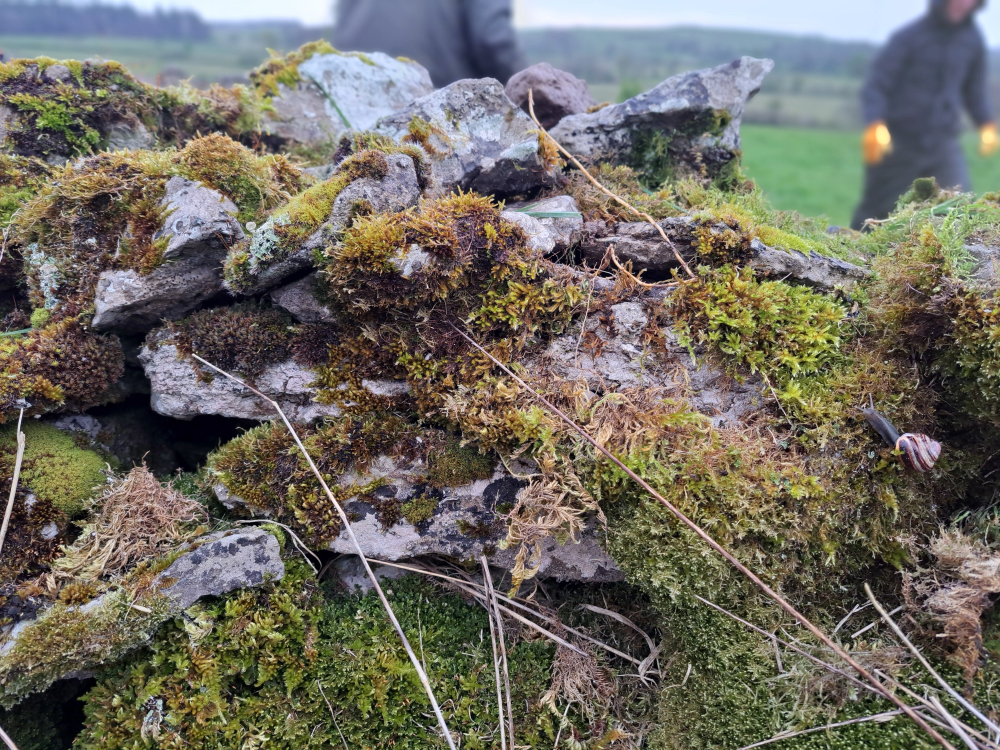
Hopes for the future
“This is what art is for: to make us feel more united. Otherwise we’re not human beings.”
Maria Lai, Artist
This project is rooted in the belief that conversation can be a powerful tool—for critical thinking, for sharing knowledge and skills, and for cultivating compassion and innovation. By spotlighting individual voices within a collective context, we hope to foster not only awareness but social change.
At its core, the project seeks to create a space where dry stone wallers, ecologists, landowners, and local councillors can come together—sharing perspectives, listening actively, and acknowledging the different ways each group expresses care for both the craft of walling and the landscape of the Mendip Hills.
At this stage the exact form this dialogue will take and what this could look like is not yet known, but the intention is clear: To build understanding, and to celebrate the many signs of care that already exist within this unique and shared landscape.
Field Notes
Notes from the field
‘There’s a unique smell to the stone when you crack it open, it’s the first time that bit of stone has seen the light of day for millions of years, it sparkles and there’s a distinct earthy gassy smell – sometimes when I go home at the end of the day there’s that smell on me.’
– Dry stone waller, SWEDSWA
Shipham, October 2024
Cold day. Wind whistling through the stones.
short hike up to the wall. followed the sound of stones and voices.
friendly faces, informative, engaging.
Radio playing on low level and could be heard against the wind and stones. Hevay gloves, waterproofs. dust.
‘You have to work with the stone, not against it. I don’t like using any tools really with limestone, it’s not very forgiving stuff.’
‘It’s pretty incredible when you think that I touch every stone twice. The last person to touch these stones would have probably been around 150 years ago.’
‘I do funny things with stones.’
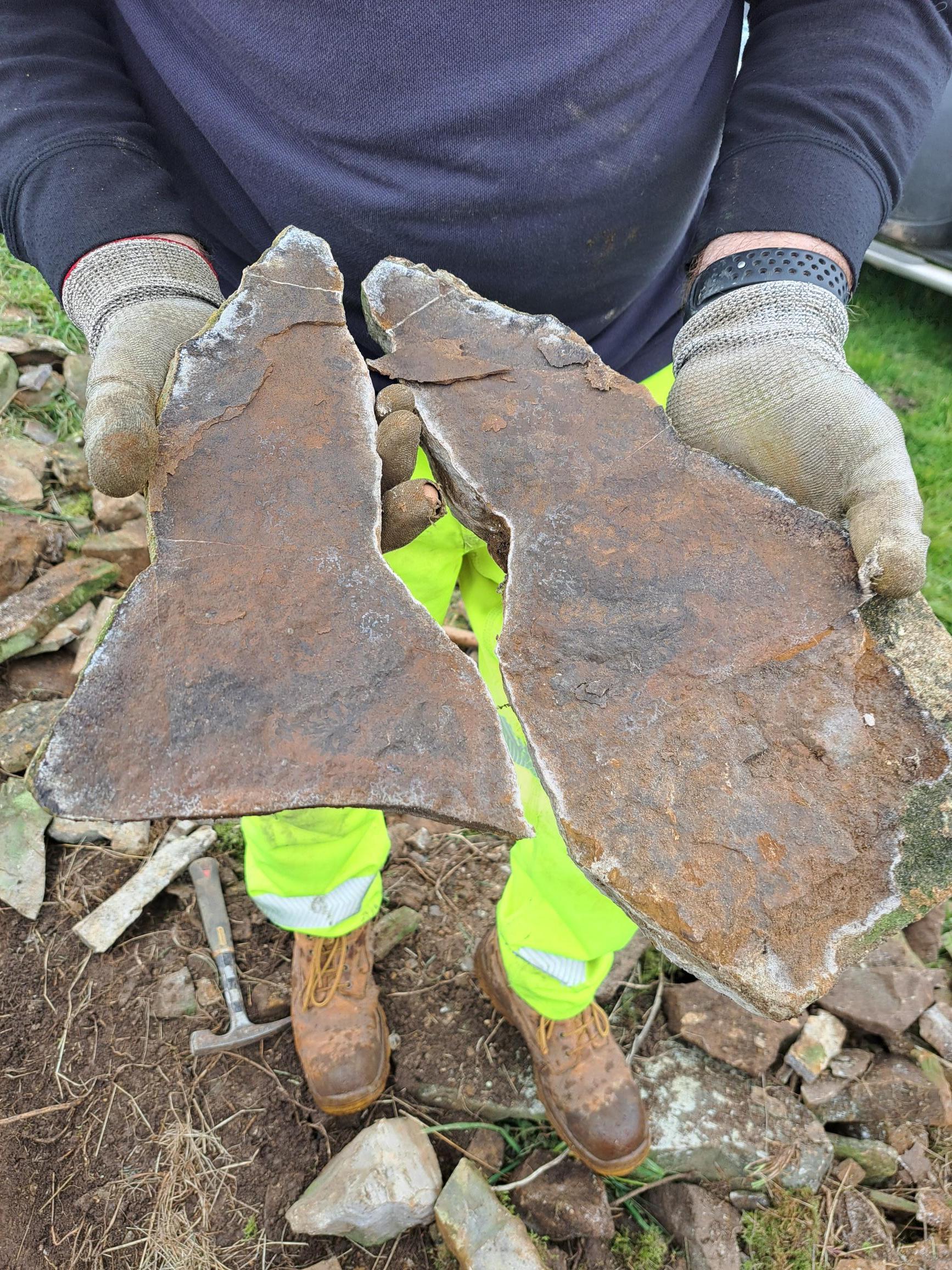
Cracks a limestone rock open with a chisel. I smell it. It smells earthy and metallic, I can almost taste it.
‘It’s the first time that face of stone has ever touched the air, or been exposed to daylight.’
‘The smell only stays for a spit second, but it’s so unique. I go hope smelling of limestone dust.’
Crouch down against the re-built part of the dry stone wall, you are completely sheltered from the wind. The howling stops, there is calm. No wonder the sheep love it.
Lunch in cars. Tea in flasks.
A swift goodbye until next time.
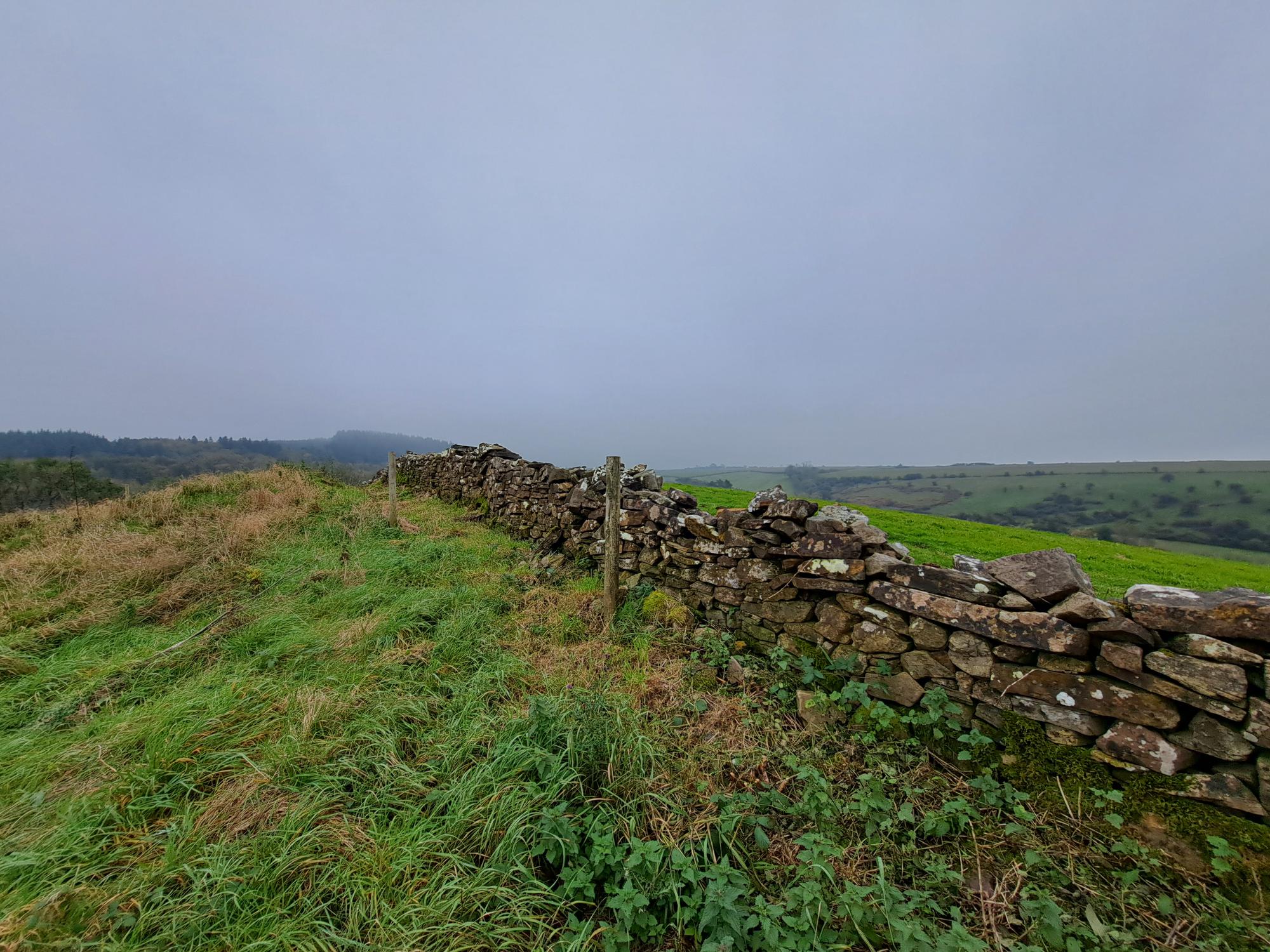
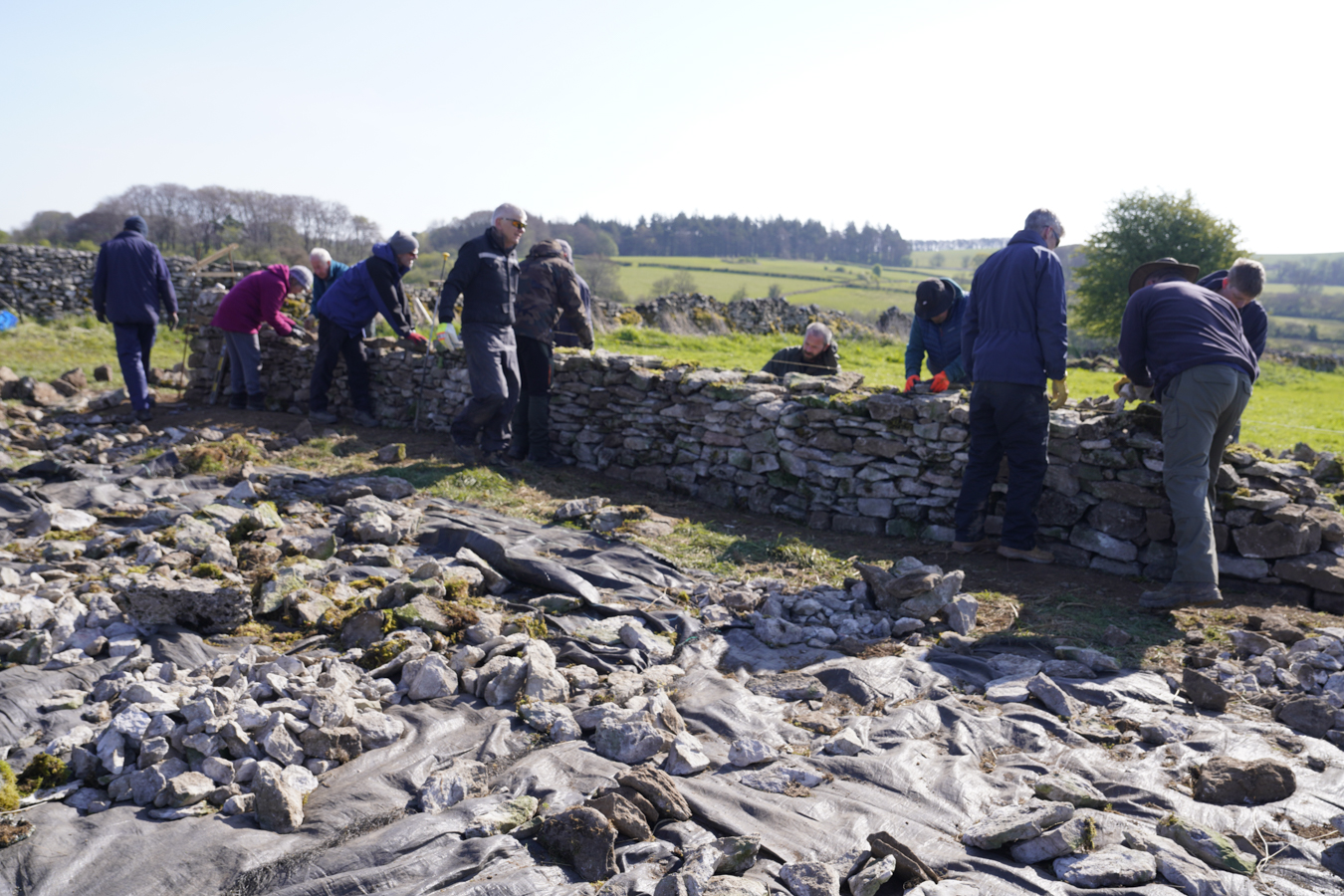
Priddy, April 2025, Day 1 (fieldnotes)
Wet weather, windy cold.
Smell and dust of the limestone covered clothes and went into eyes.
Found a small blackish coloured toad hiding amidst the limestones. We gently moved him along the wall where he would find a new home and not be disturbed.
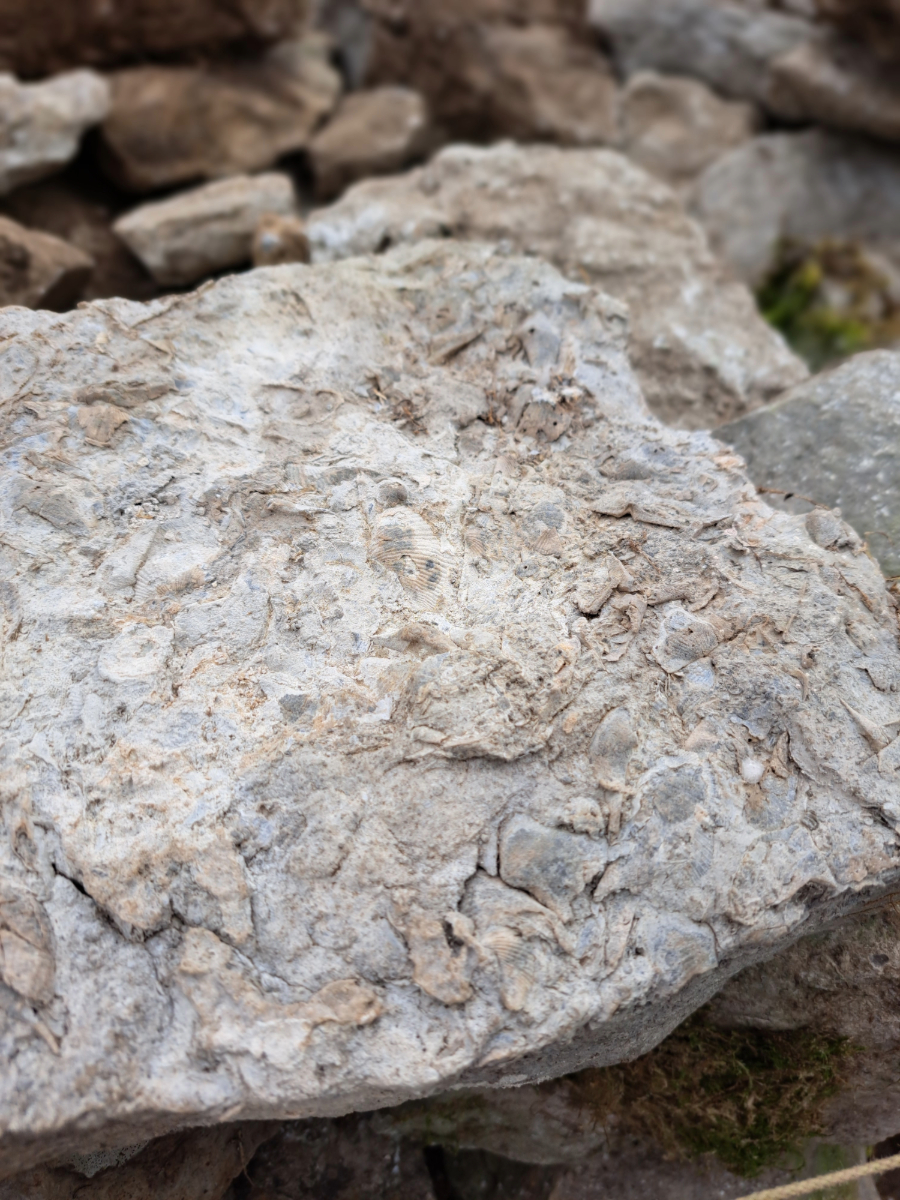
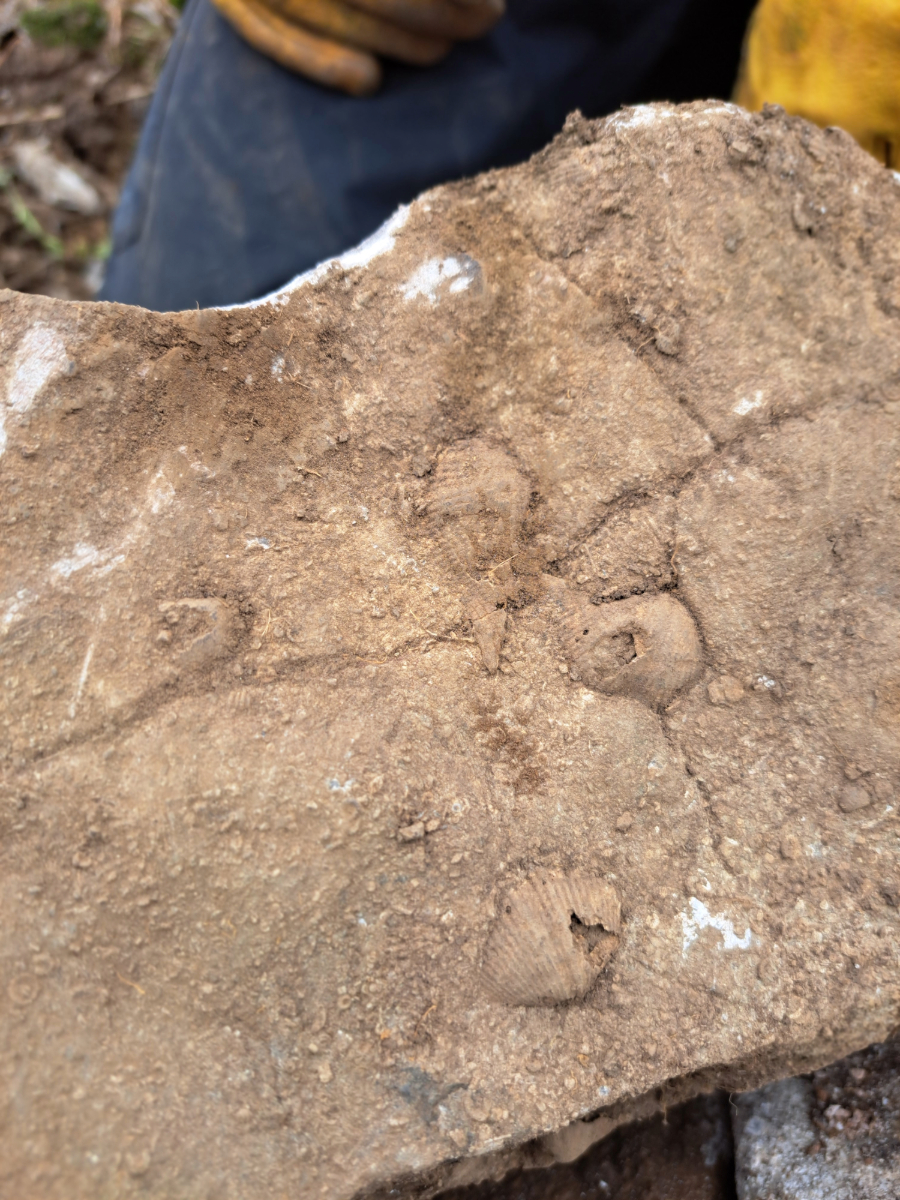
Beautiful fossils discovered in printed into the stones, conical forms, shell like forms.
Snails, worms and a pheasant nest also found. Eggs were cold so they had moved on long ago.
The wind was strong, noisy and persistent.
Cold hands, cold toes.
Sky larks could be heard nearby and a family of deer laid on the grass at the bottom of the field.
Probably 150-200 years ago was the last time these stones had been touched by human hands.
An old piece of bone was found in the wall – most likely an old ham bone from lunch of the previous waller all those years back. Also bits of broken pottery and glass, potentially from cider bottles, but nothing more to note.
heavy lifting, warmed up. Stripped layers.
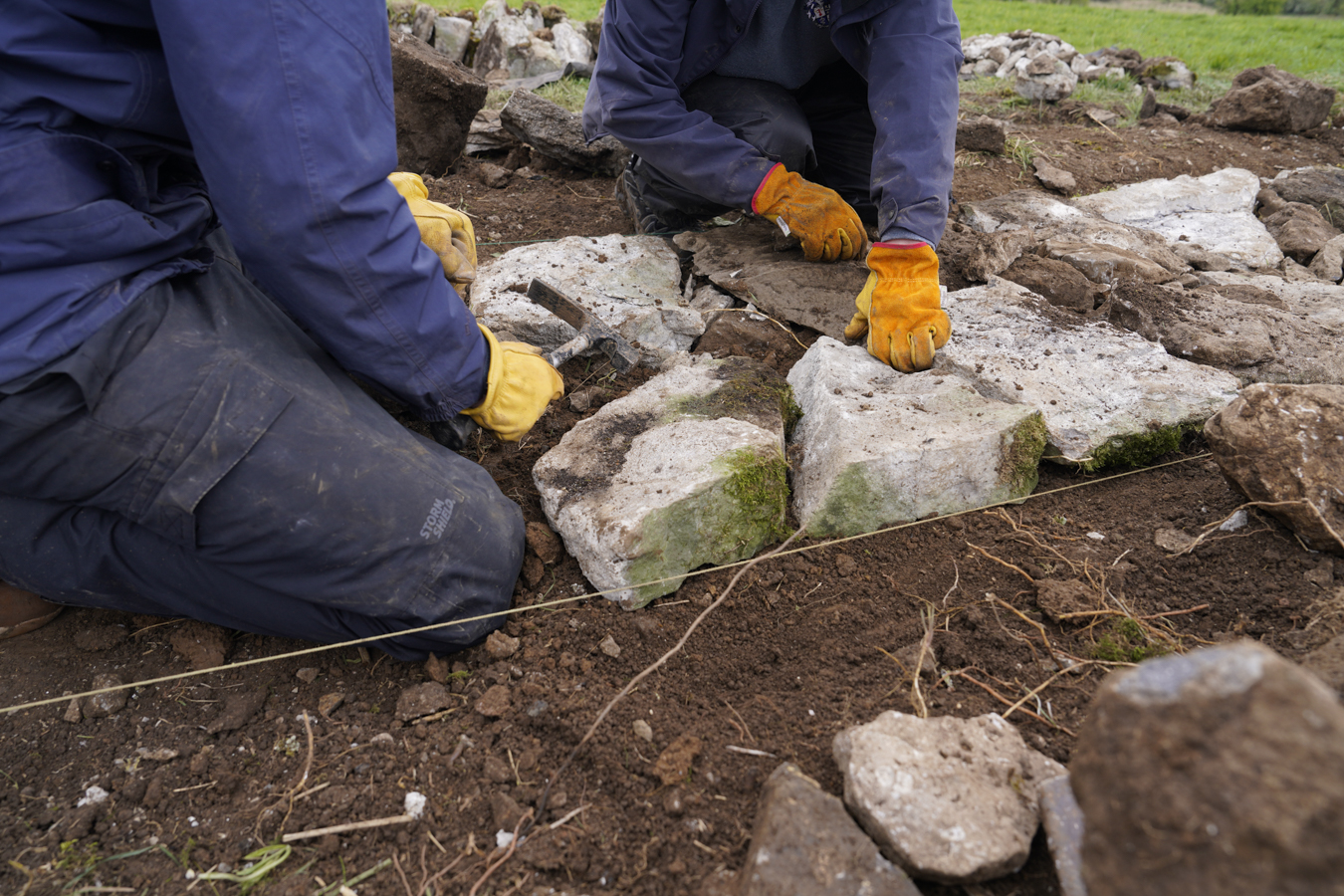
Sounds of the mattock in the soil catching abd lifting stones. Ping ping.
Muffled conversation.
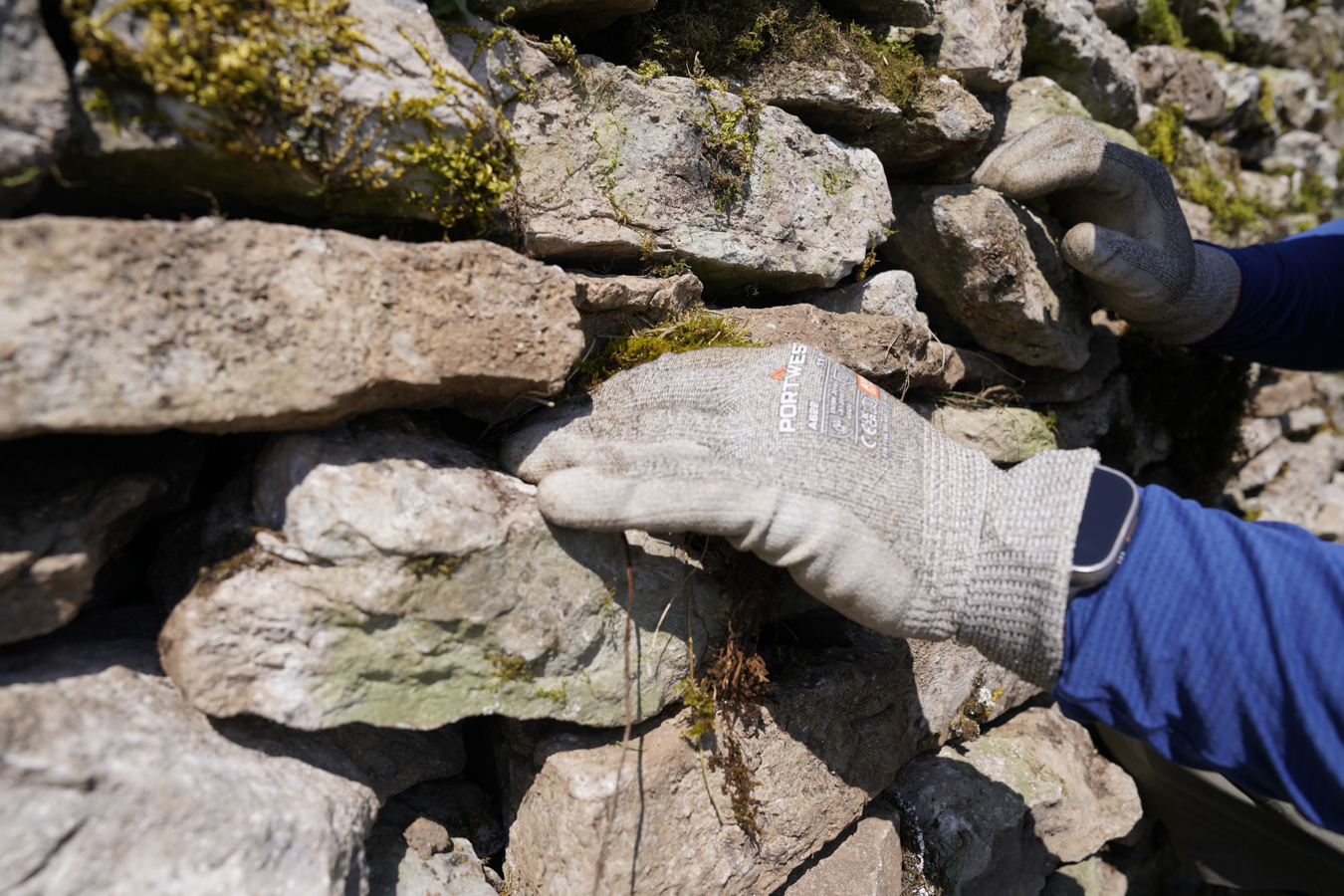
Gloves on stone.
Words that fellow wallers used to describe the first day
‘Thought provoking, mindful.’
‘Definite need to work with the stone not against it,’
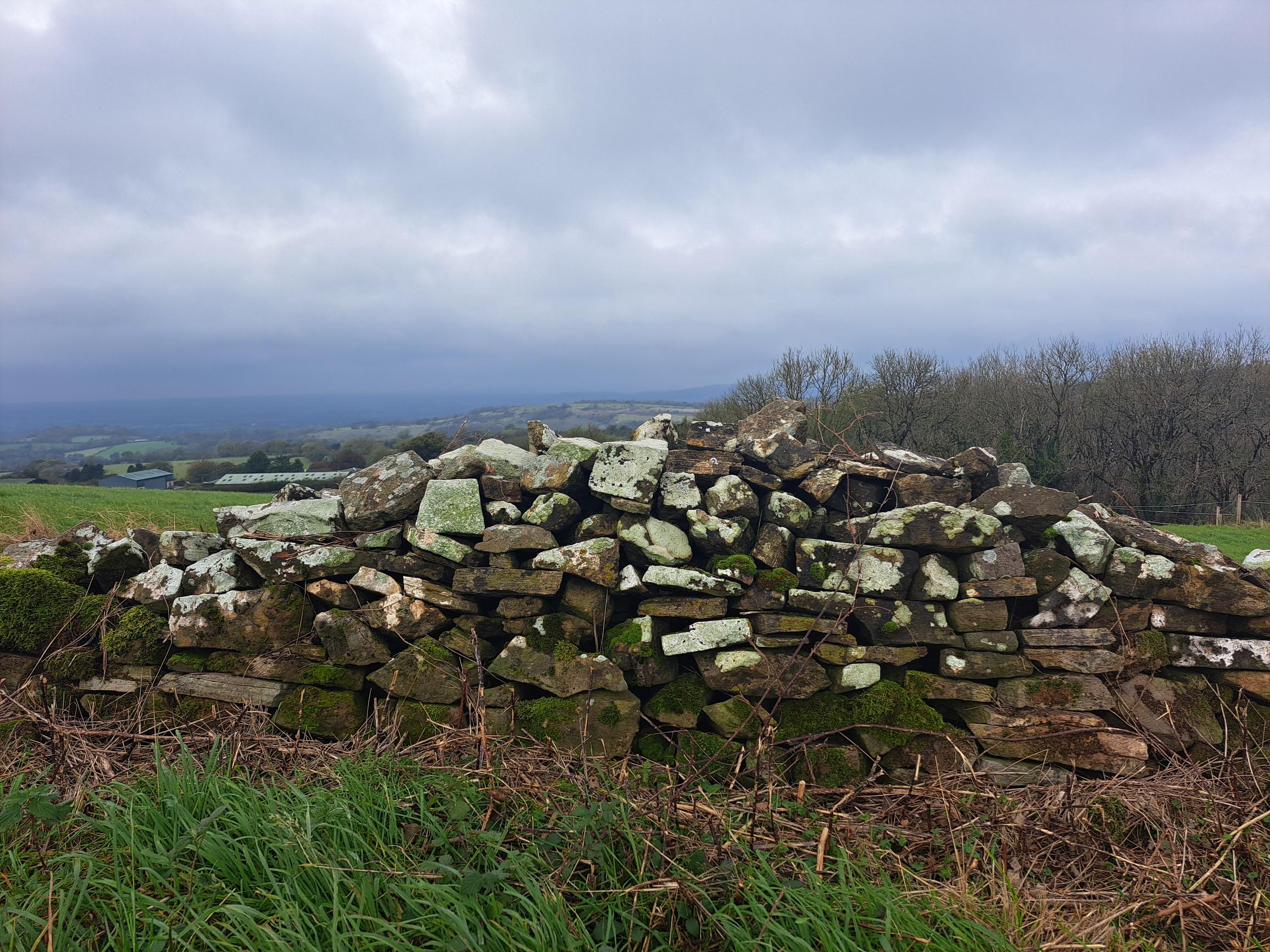
Day 2
Sun blazing, warmth on face.
Friendly faces, hot flasks of tea.
Remember to take care.
Sense of achievement, half built wall.
Wind still high on the Mendips, limestone dust in hair and face, contacts stinging.
Heavy stomps, searching for stones.
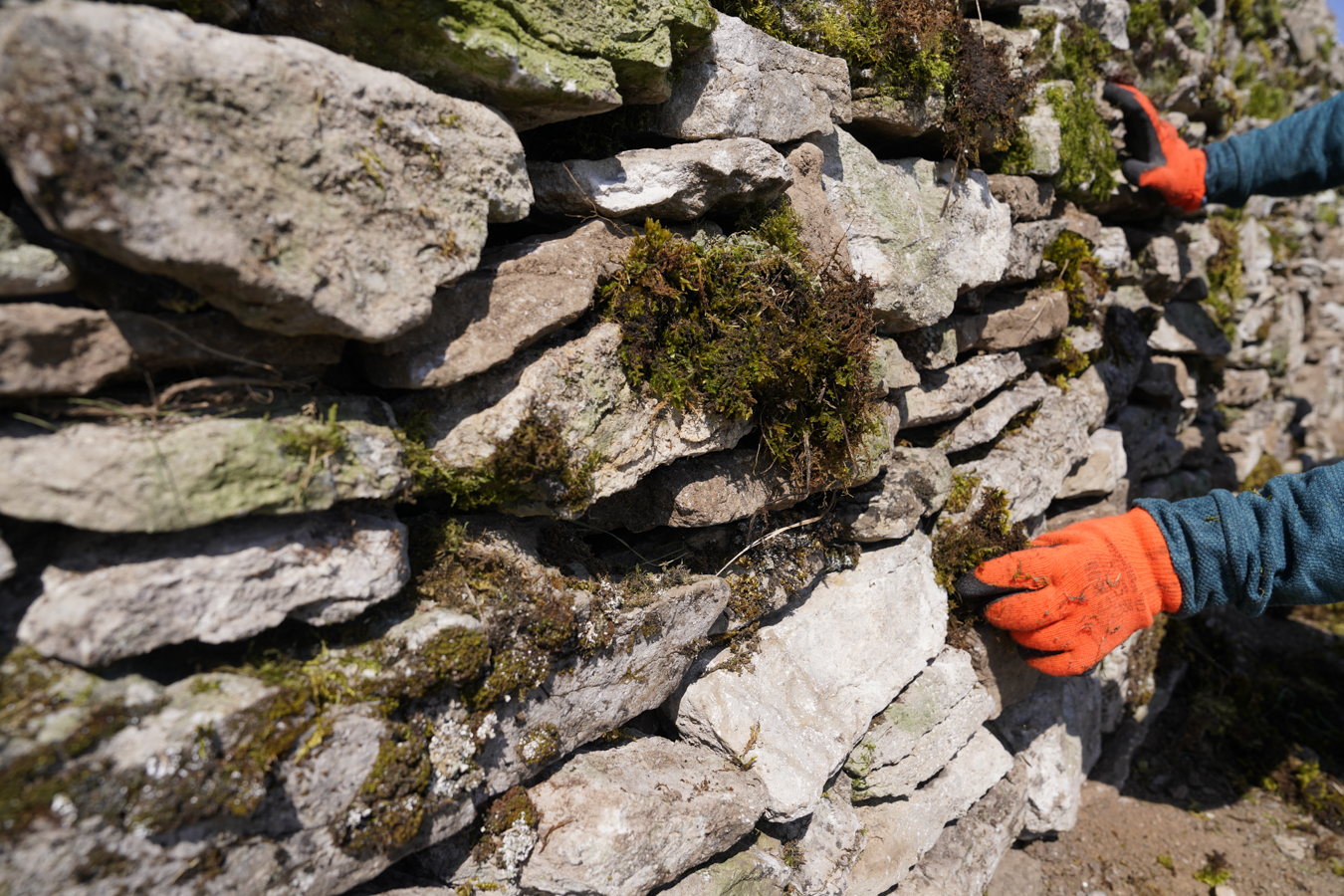
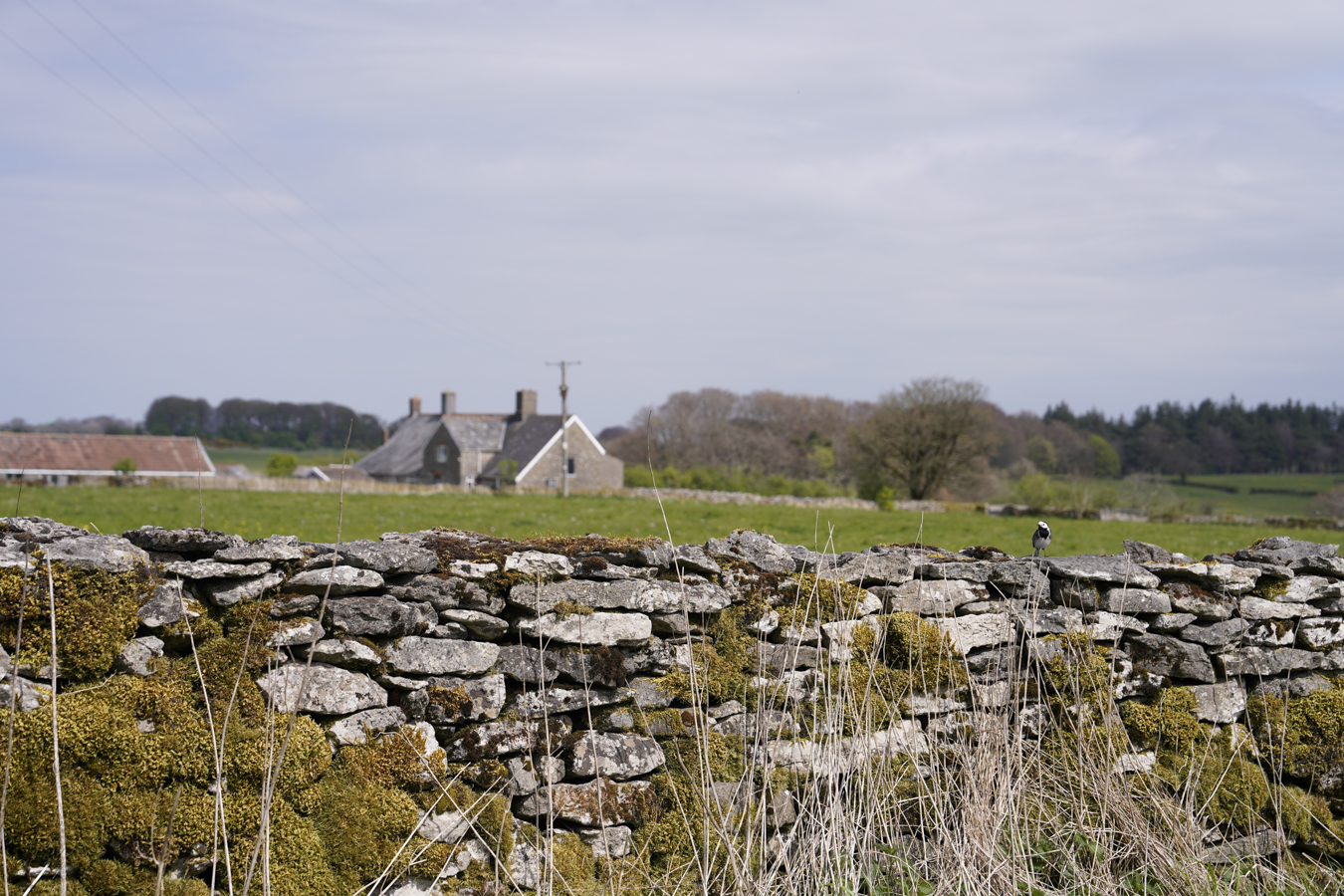
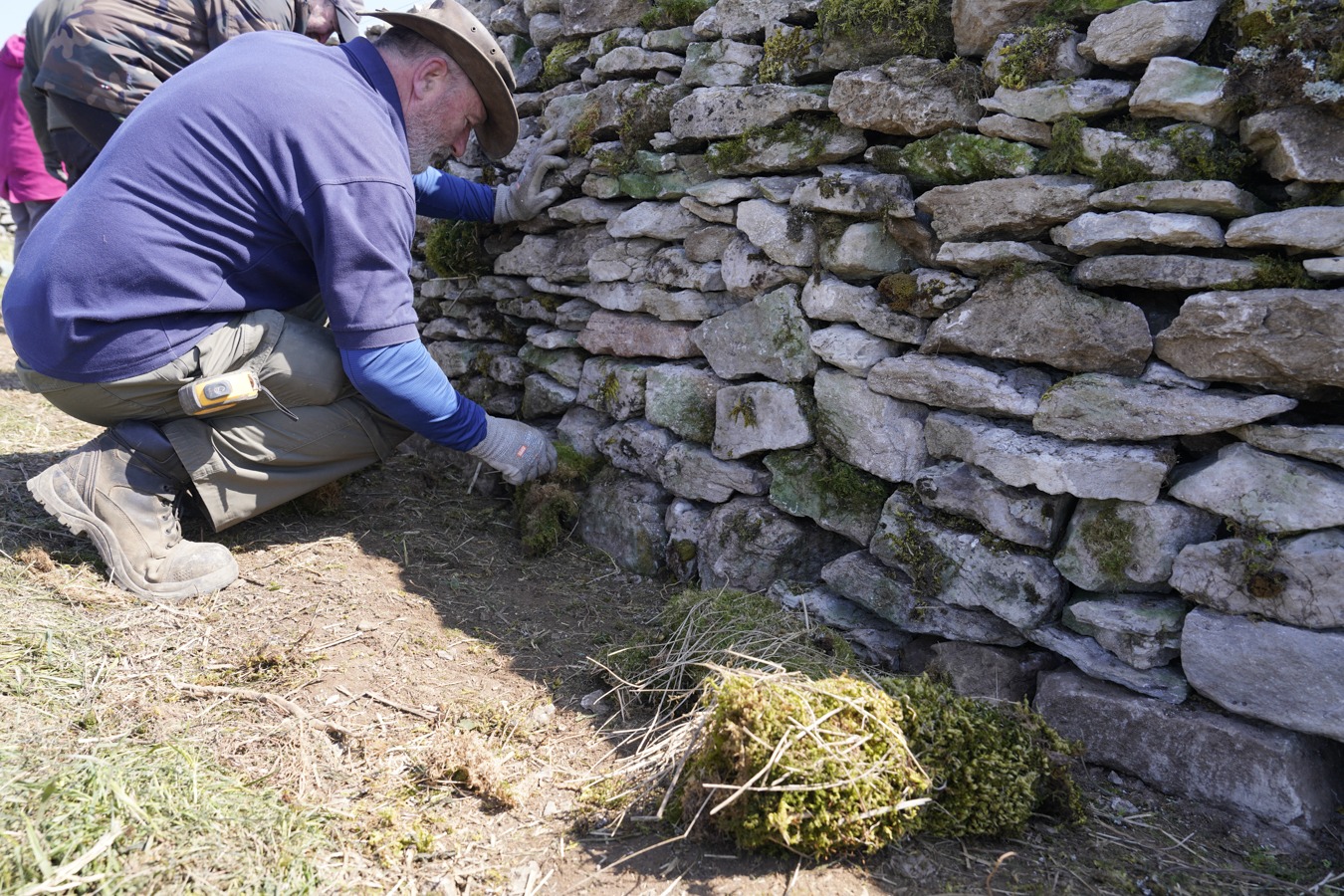
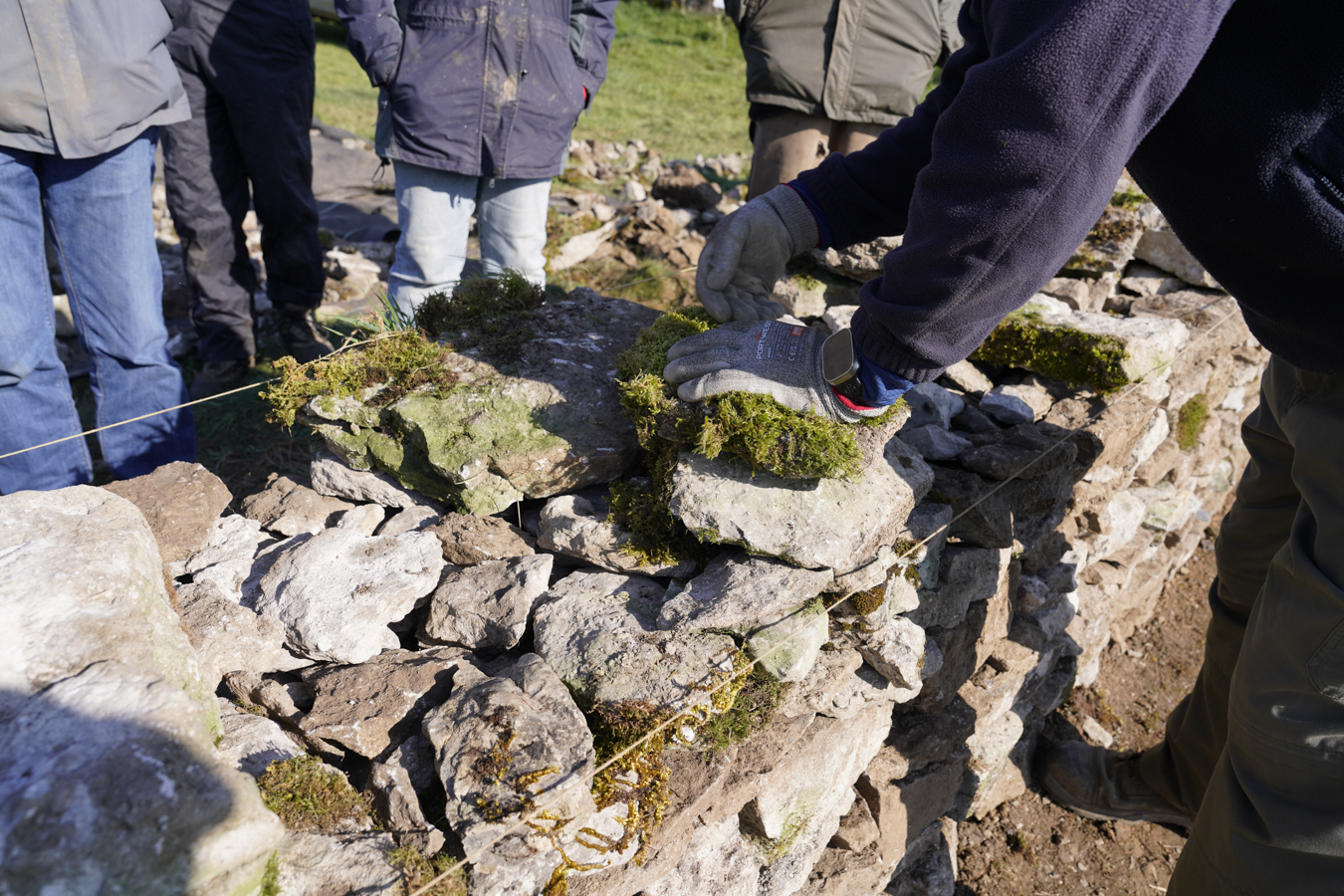
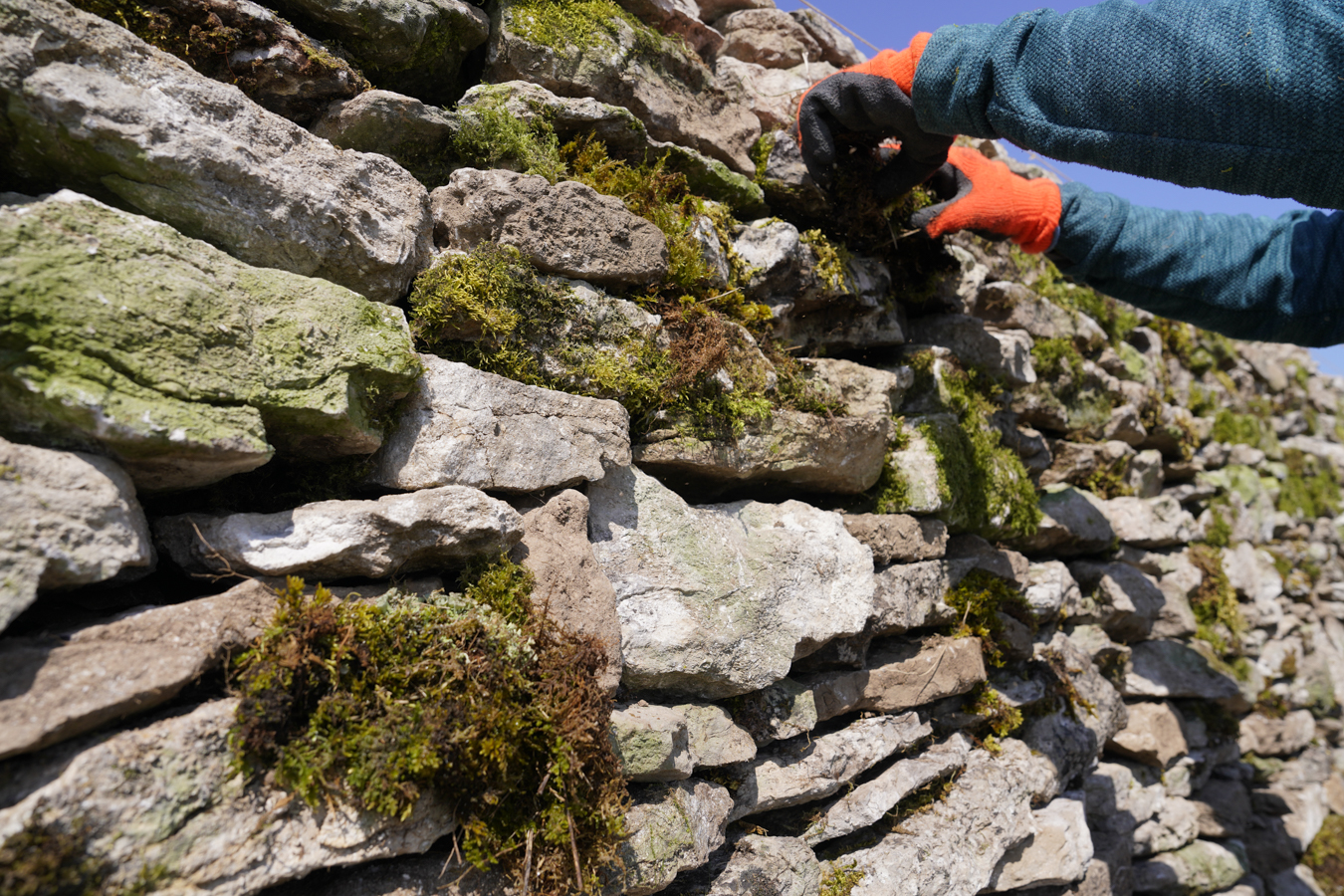
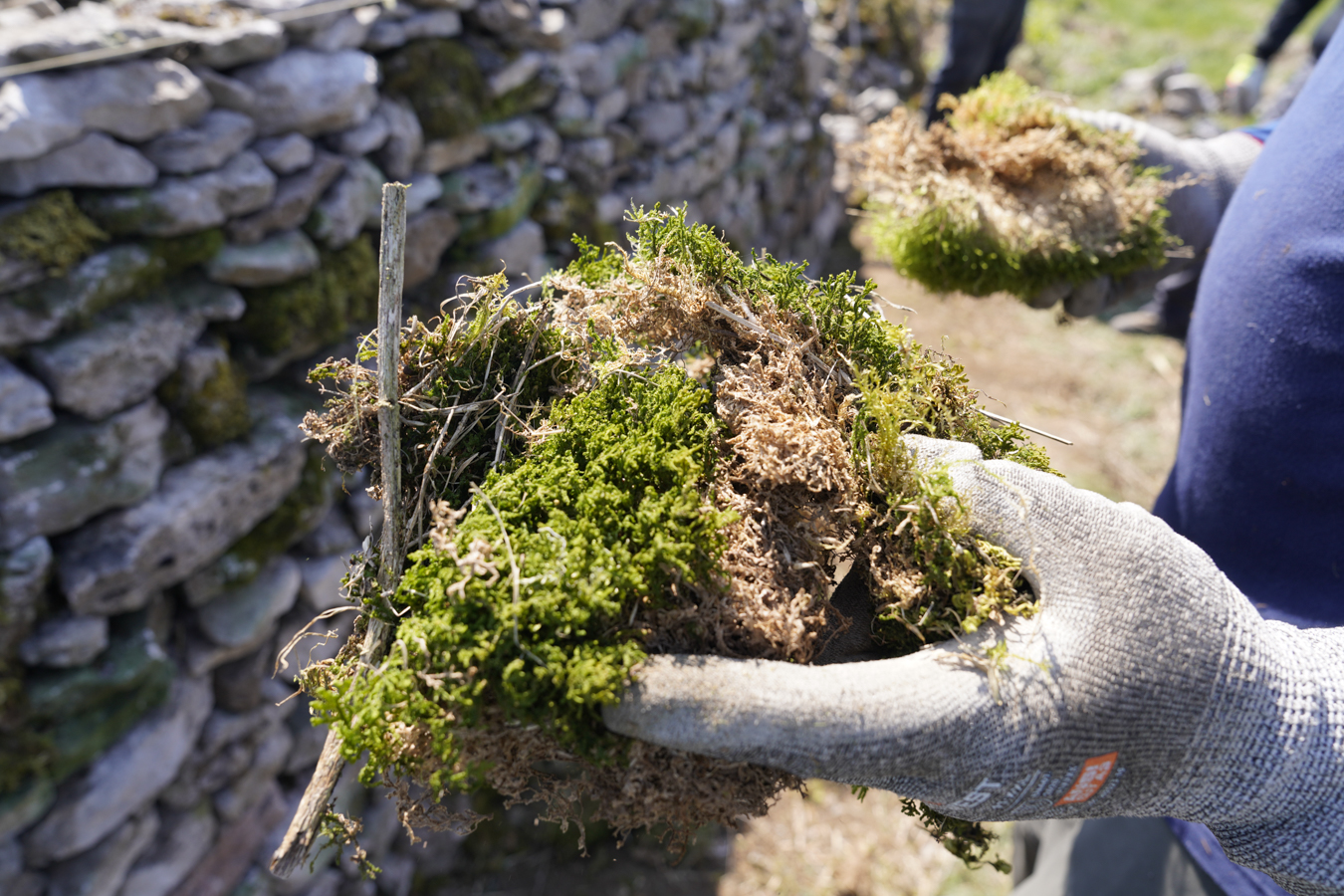
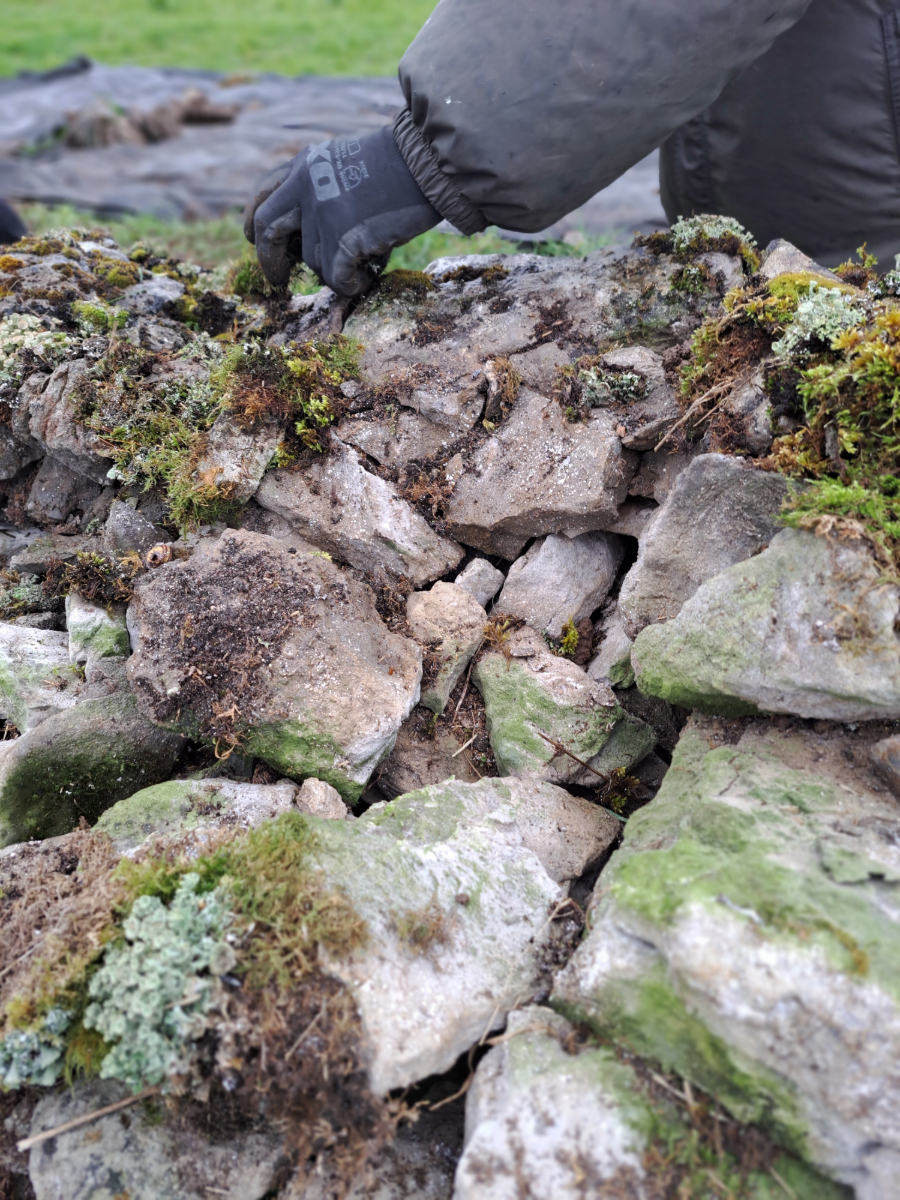
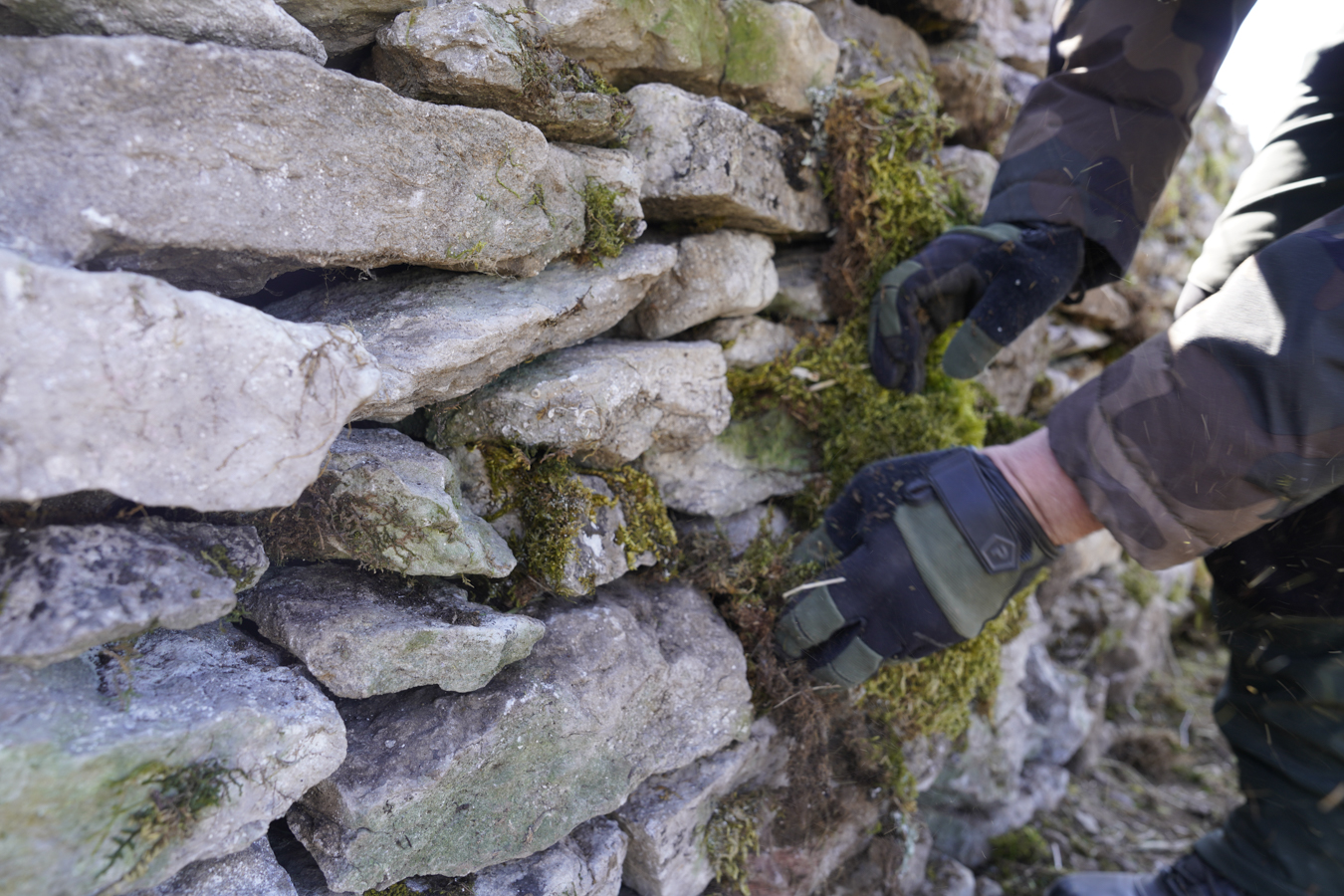
Not this one, that one. Try this one. Putting the moss back is a delicate practice. Filling the cracks back up with green to make the wall living again.
Impact
Impact
The content of this stone is still to be added.
Case Studies | Fragments
Case Studies – Fragments
This stone brings together some of the influential artists and projects in the context of socially engaged practice that have been important case studies in this project’s development.
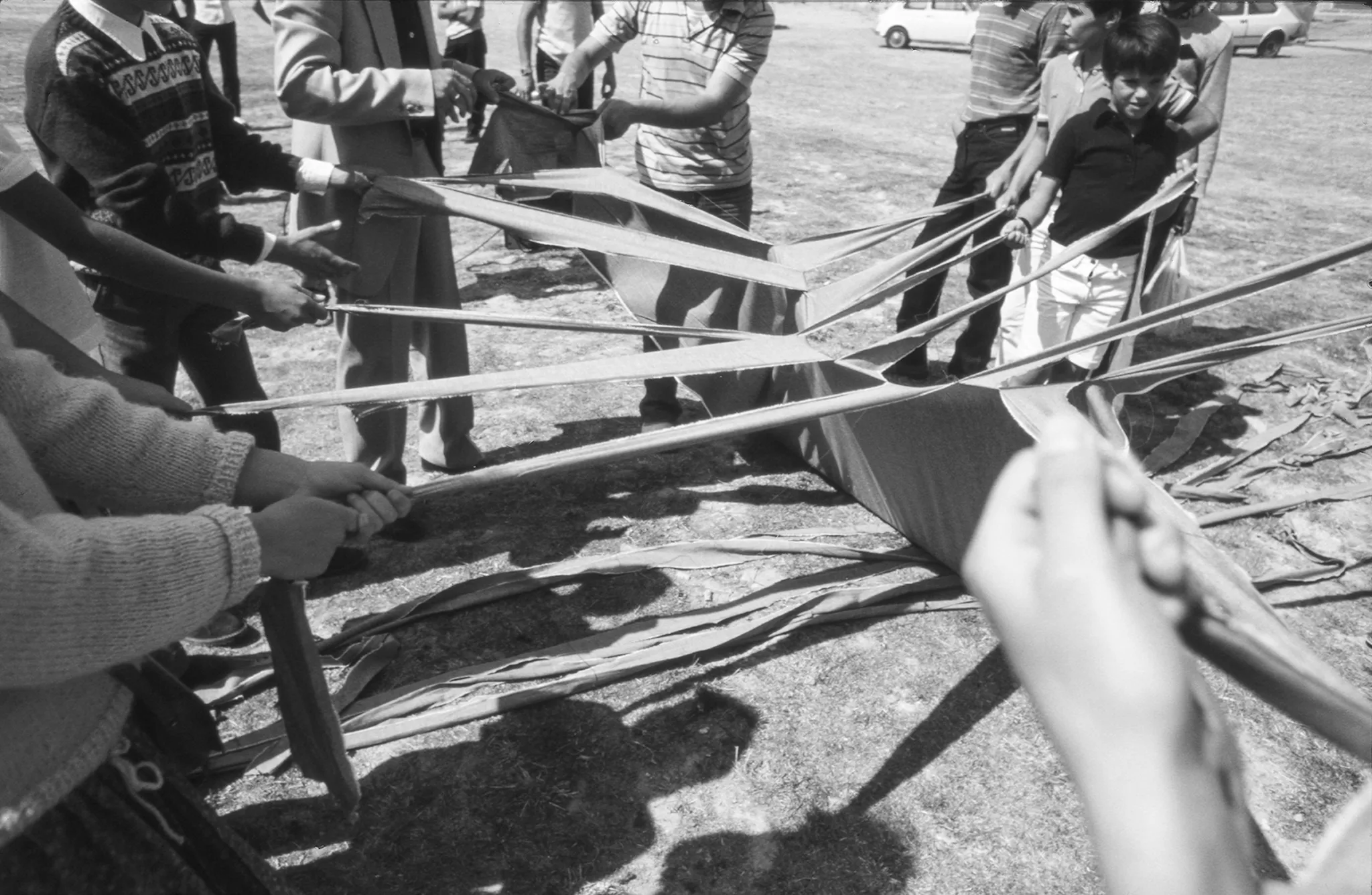
Maria Lai – Legarsi alla Montagna (Tied to the Mountain) 1981
In 1981, Sardinian artist Maria Lai transformed her hometown of Ulassai through a poetic act of social sculpture titled Legarsi alla Montagna (Tied to the Mountain). Instead of installing a permanent artwork, Lai proposed something radical: to physically tie the village to the surrounding mountain using a ribbon of blue fabric.
Working with local residents, she wove fabric through streets, around houses, and finally into the craggy rock face above the village—symbolically connecting the people to each other and to the land they lived on. The project drew on traditional stories and rituals, blending folklore, community collaboration, and landscape together. Here, the process of participation and dialogue becomes the artwork itself. It reshaped the role of the artist, emphasised shared cultural identity, and showed how art can bring together memory, place, and people in a powerful way.
Barbara Steveni and the Artist Placement Group
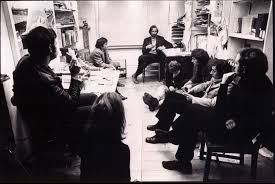
A key influence in the development of the ‘Making Conversation’ programme is Barbara Steveni. Steveni co-founded the Artist Placement Group (APG) in the UK in the 1960s as a radical reimagining of the artist’s role in society. Rather than confining artistic practice to galleries or studios, APG embedded artists within government bodies, industries, and public institutions—placing them as active participants in real-world contexts. One of Steveni’s most influential contributions was the development of the ‘open brief’, a departure from the prescriptive commissions often given to artists. Instead of defining what an artist should produce, the open brief invited artists and host organisations to co-develop the focus of the placement through dialogue, observation, and mutual exchange. This model positioned the artist as a catalyst for new ways of thinking, encouraging organisations to reflect critically on their own systems, assumptions, and values. Steveni’s work with APG helped pave the way for what we now recognise as socially engaged practice, and her legacy continues to inform contemporary models of collaboration, including those centred on conversation as a creative method.
Christo and Jeanne-Claude, Running Fence (1976)
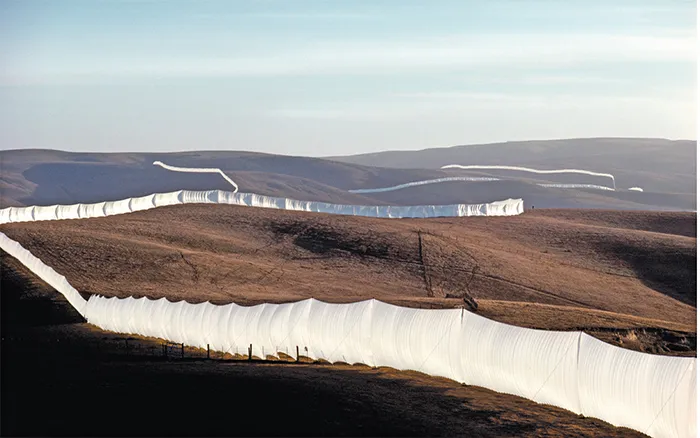
Christo and Jeanne-Claude’s Running Fence (1976) was a monumental, 24.5-mile-long fabric installation that temporarily crossed the rolling hills of Sonoma and Marin Counties in California. Stretching across private land, roads, and fences before disappearing into the Pacific Ocean, the project was both a sculptural intervention and a profound exploration of boundaries—geographical, legal, social, and conceptual.
Though visually ephemeral, Running Fence took over four years to realise and involved extensive negotiations with landowners, local authorities, and the public. The collaborative and bureaucratic process became integral to the work itself. By navigating property rights, environmental concerns, and political resistance, Christo and Jeanne-Claude shone a light on how boundaries are not just physical structures, but also symbolic systems of control, negotiation, and relationship.
Running Fence is a poetic counterpoint to the solidity of stone walls, suggesting that boundaries can be seen, questioned, and even momentarily reimagined.
WochenKlausur, Floating Dialogues
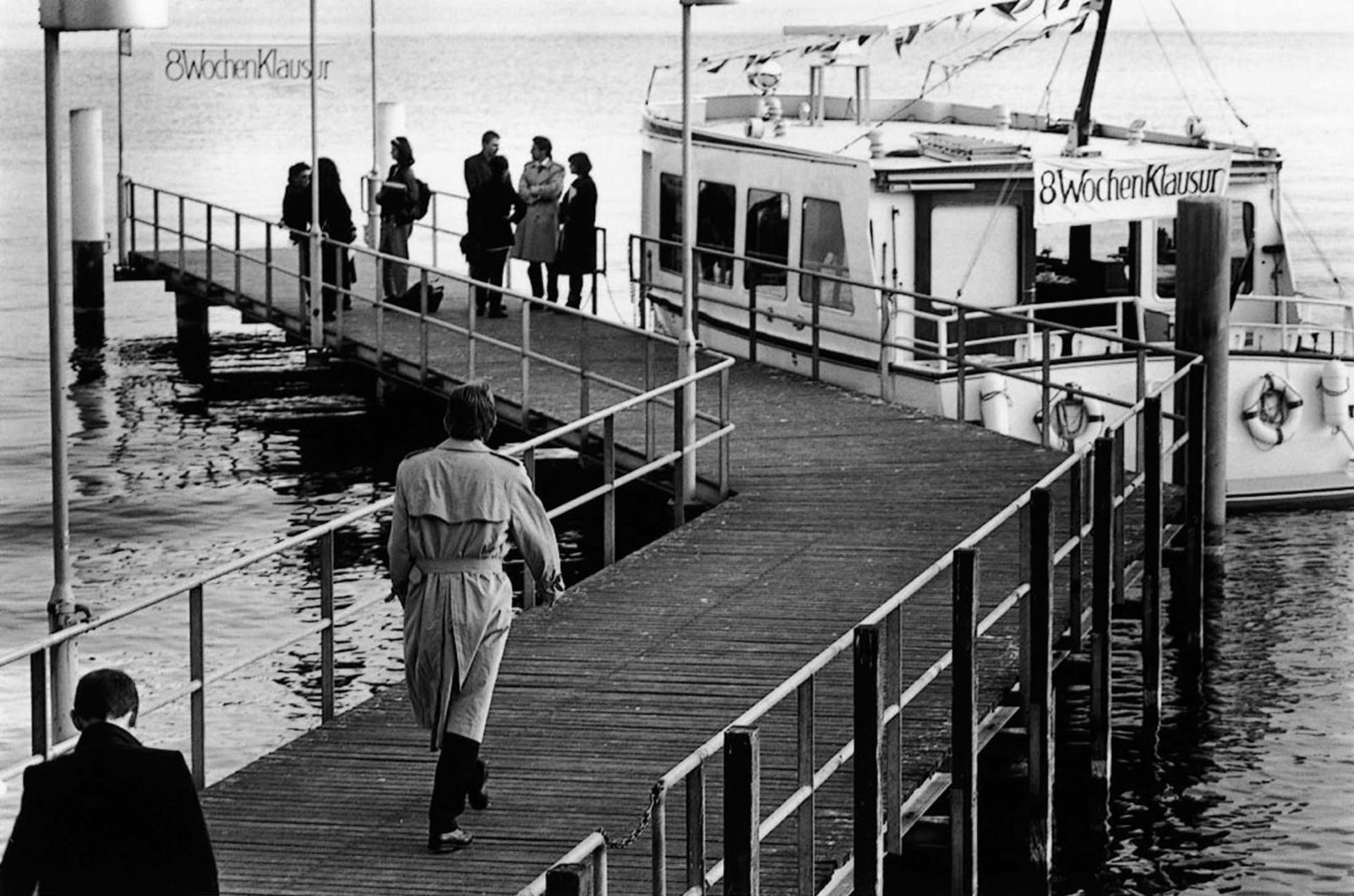
In their project Floating Dialogues, the Austrian art collective WochenKlausur turned a boat on Lake Zurich into a site for political conversation, dialogue, and problem-solving. Designed as a quiet but powerful intervention, the project brought together politicians, journalists, and people affected by social issues—such as drug use and homelessness—for small, private conversations away from the public eye.
Over the course of the project, 15 discussions took place on board the boat, each carefully curated to include just four participants. There were no cameras, press releases, or official records—just a shared space and the opportunity to listen, reflect, and speak openly. The artists remained on shore, offering context and supporting dialogue from a distance.
By moving these conversations onto the water, Floating Dialogues created a symbolic and literal distance from the noise of public life. The temporary removal from typical political settings encouraged empathy, honesty, and the potential for new understanding.
This project exemplifies how projects of this kind can challenge traditional power dynamics and create meaningful encounters. Instead of shouting loudly aboiut a message, WochenKlausur asked: What happens when we just talk—quietly, directly, and with care?
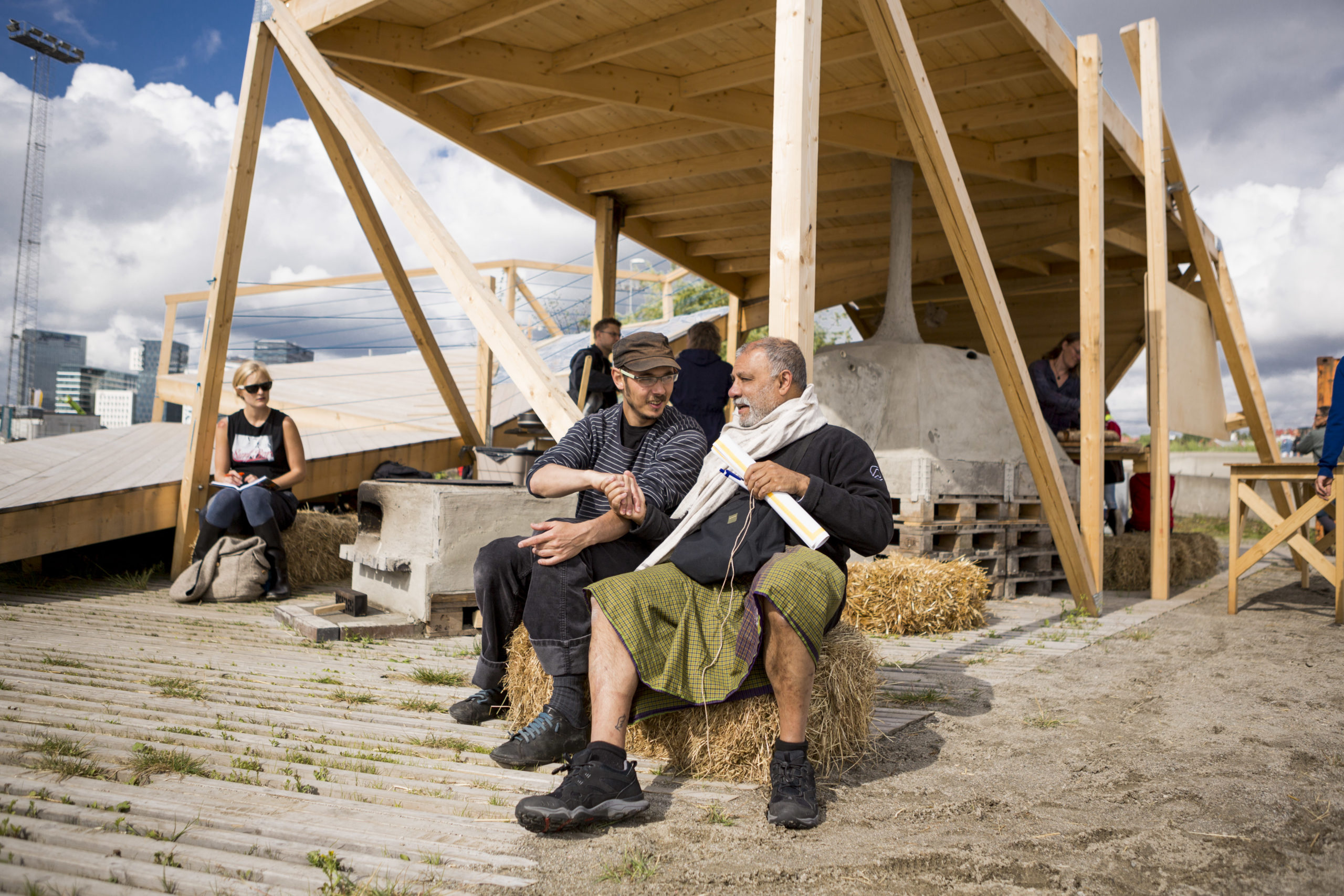
Futurefarmers, Flatbread Society (2012–ongoing)
‘Flatbread Society is not a static installation; it’s a living framework for cultivating relationships between people, land, and time.’ – Futurefarmers, 2015
Flatbread Society is a long-term public art project by the international artist collective Futurefarmers, initiated in Oslo, Norway, in collaboration with local residents, farmers, artists, scientists, and urban planners. At its heart is a shared belief that ecological awareness grows through collective action, storytelling, and dialogue.
The project centres around the Losæter urban farming site in the Bjørvika district, where a public bakehouse, grain field, and community oven have become tools for hosting open conversations about food, land use, and sustainable urban development. Public bread-making events, seed exchanges, and seasonal gatherings create informal yet intentional spaces for learning, sharing, and debate.
Rather than presenting ecology as an abstract issue, Flatbread Society roots it in everyday rituals and accessible cultural practices—breaking bread as a prompt for critical ecological conversations. Through this, the project fosters a deep sense of place, care, and collective stewardship, turning public art into a catalyst for environmental awareness and grassroots action.
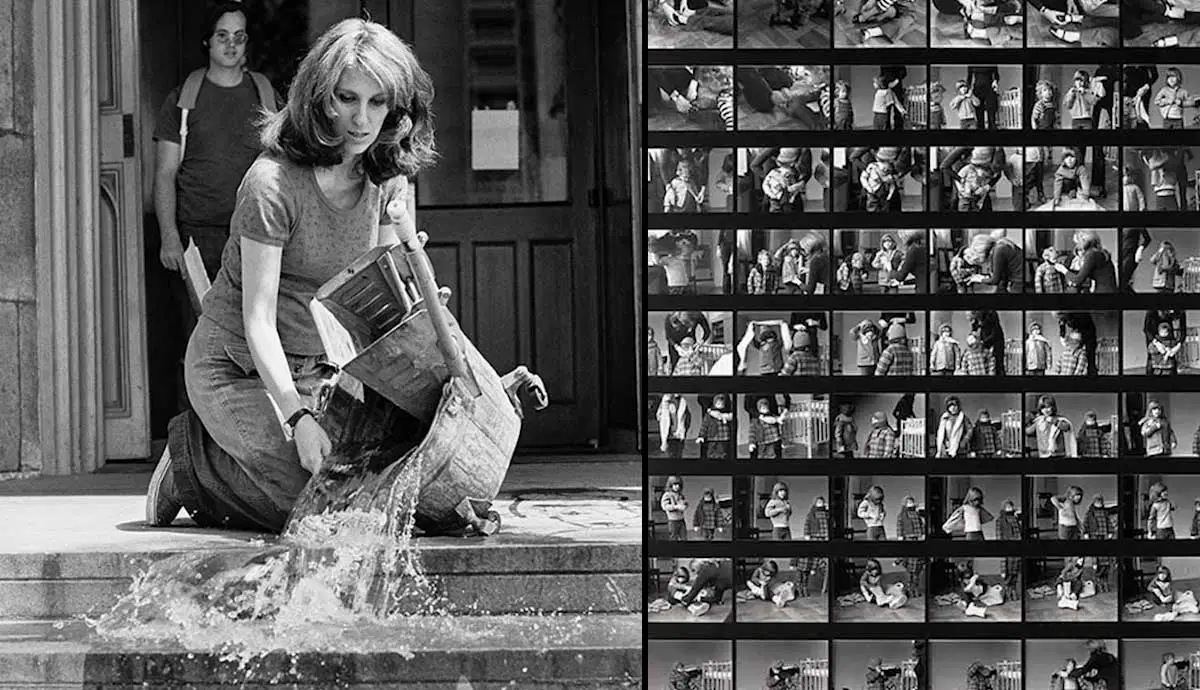
Mierle Laderman Ukeles, Art as an Act of Care (1969)
Mierle Laderman Ukeles is an artist who has spent her career exploring what it means to care—for people, for cities, and for the invisible labour that keeps society going. In 1969, she wrote her famous Manifesto for Maintenance Art, boldly declaring that acts of care and upkeep—like cleaning, parenting, and repairing—are not just chores, but vital forms of creative and civic engagement.
Since 1977, Ukeles has worked as the official artist-in-residence at the New York City Department of Sanitation, where she’s developed art projects in collaboration with thousands of sanitation workers. In her most iconic project, Touch Sanitation (1979–1980), she travelled across the city, shaking hands with over 8,500 workers and thanking each one for “keeping New York City alive.” In these projects Ukeles invites us to reconsider how we value care and who performs it. Her work transforms everyday maintenance into a public, participatory form of art—one rooted in respect, visibility, and social responsibility.
Acknowledgements
Acknowledgements
With special thanks to the following organisations and individuals who have supported the project:
-
Amanda Crabtree, artconnexion
-
Cam Burns
-
Chris Stephens
-
Chris Waite
-
Colleagues and tutors at UHI
-
Ecologists at Bristol City Council
-
Kevin Toal
-
Landowners who would like to stay anonymous
-
Mendips National Landscape Organisation
-
Nicola Naismith
-
National Dry Stone Walling Association
-
North Somerset County Council
-
Rachel Dunning
-
Roxane Permar
-
Siún Carden
-
Swedswa (South West Branch)
-
Swedswa dry stone walling members who would like to stay anonymous
-
The National Trust
-
Tim Haseldan
-
Tracy Mackenna, Curator, The Museum of Loss and Renewal
-
Fellow residents and collaborators at the School of Loss and Renewal, Collemacchia who helped so much to progress my thinking on this project;
-
All other tutors at UHI who have kindly shared their knowledge, given their support, time and encouragement.
-
Fellow students on the Art and Social Practice MA and alumni who have always offered valuable support and feedback.
Key resources and further reading
Making Conversation
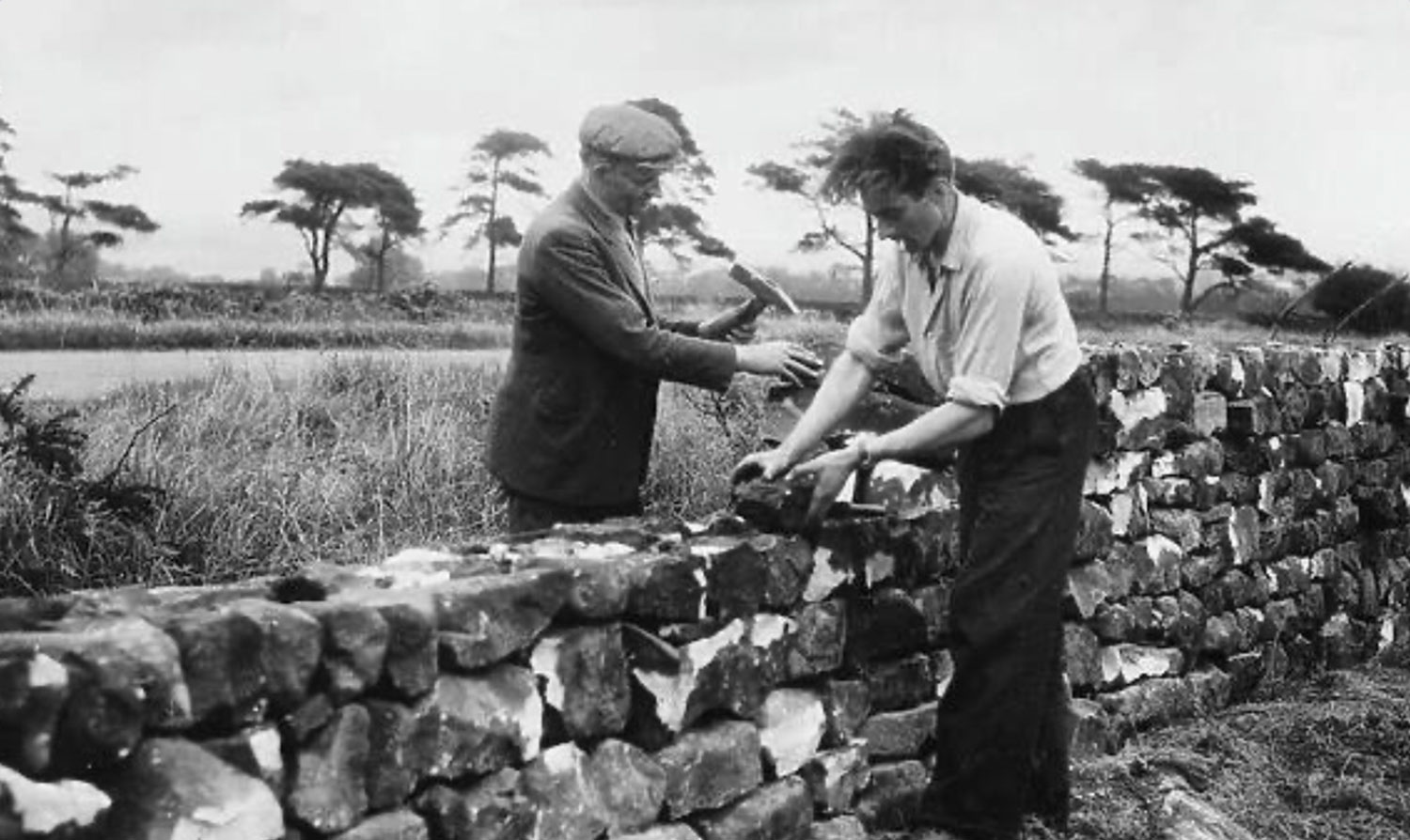
About the Making Conversation Programme
‘Artists don’t just reflect society, they re-shape it.’
– Barbara Steveni
‘Making Conversation’ is a live working methodology Georgina has developed and adopted as an artist-researcher during her Masters in Art and Social Practice at the University of the Highlands and Islands (UHI), Scotland, UK.
In this programme, people are invited to come together and make conversation as a discursive social practice.
Setting the appropriate conditions for each collective, investigative discussion, Georgina provide spaces and tools for conversation around particular topics of interest which have been identified by the participants themselves, inviting people to come together to both share, and to listen to, multiple viewpoints and perspectives.
Through shining a light on, and platforming individual voices amongst the collective, Georgina hopes that the vehicle of conversation can be a tool for critical thinking, knowledge and skills sharing, innovation, compassion, and ultimately, social change.
‘How should we rebuild a broken wall? is the first project in the Making Conversation programme. Please visit the About section of this site for more information on this specific project and digital publication.
Cracks
The content of this stone is still to be added
Signs of Care
Signs of Care
‘You touch every stone twice’
– Dry stone waller, Mendips
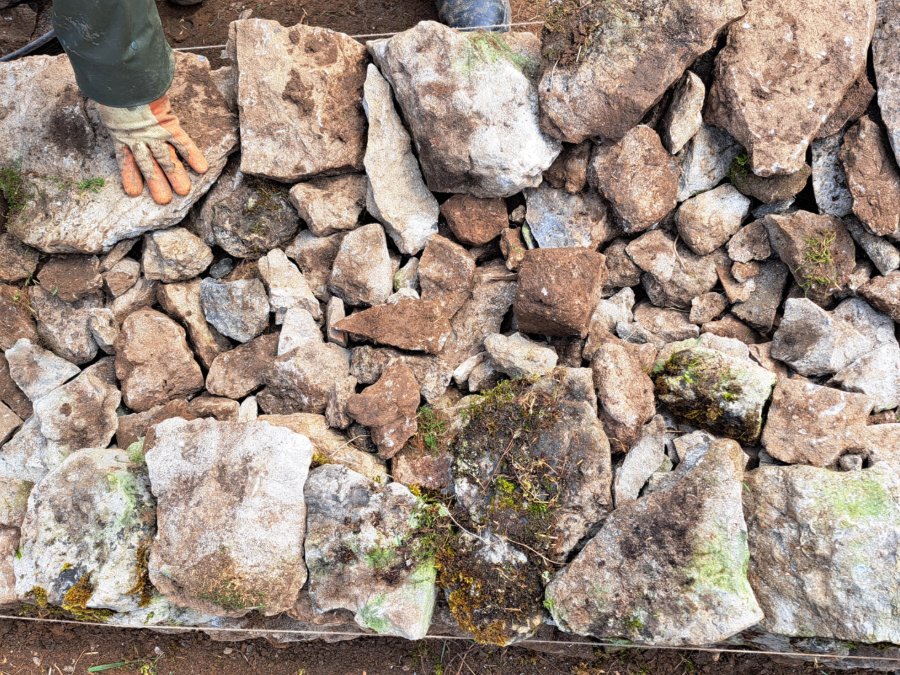
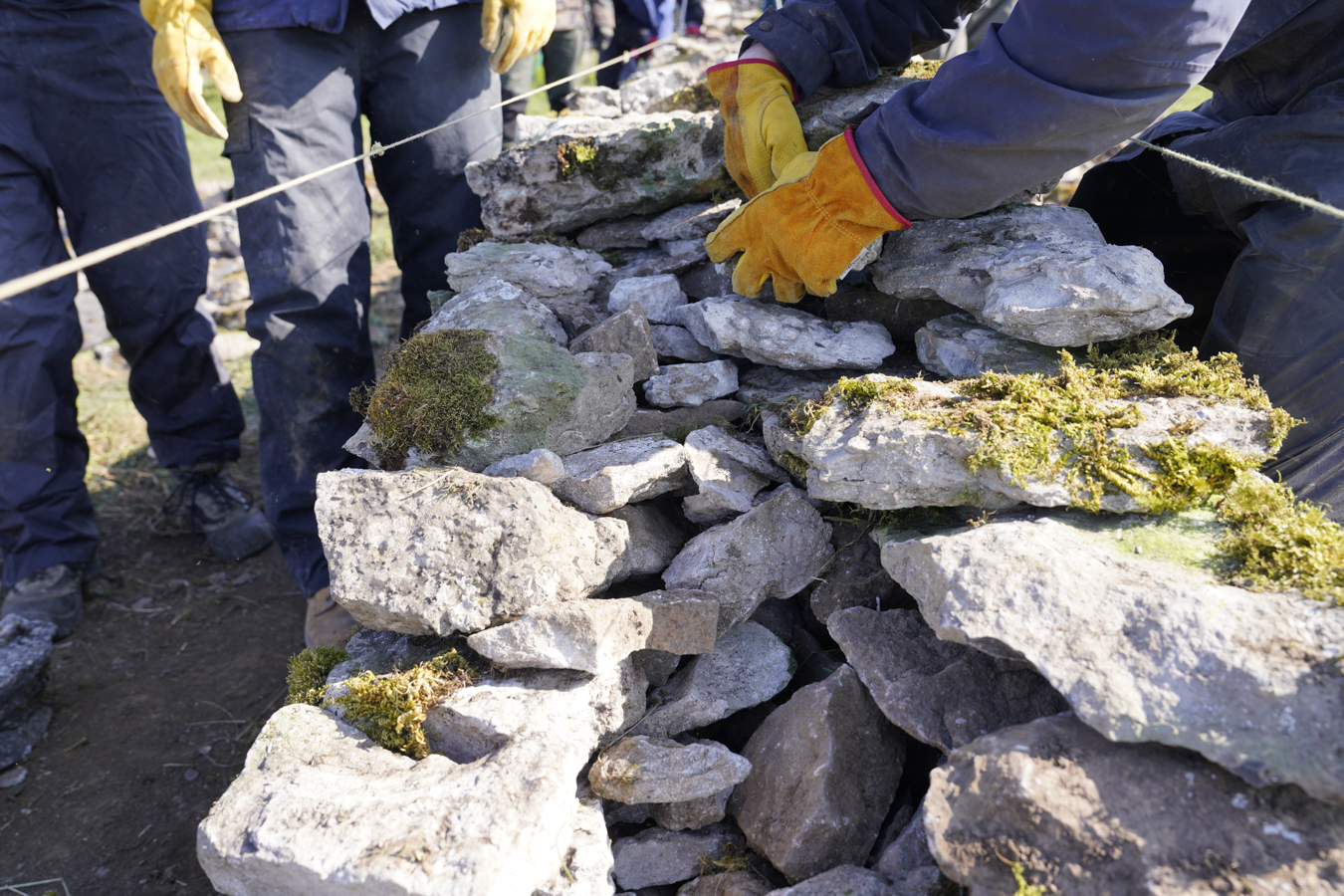
The craft of dry stone walling has its own rich and precise vocabulary—a language that speaks to care, patience, and deep attention to detail. Terms like hearting (the small stones carefully placed within the core of the wall), through stones (long stones that tie both sides together), and (in some areas) coping stones (the finishing stones that protect and complete the structure) all reflect the thoughtful, layered nature of the work. Each word describes not just a function, but an act of repair, connection, and stewardship—echoing the quiet, deliberate care that defines both the craft and the wider values of the Making Conversation programme.
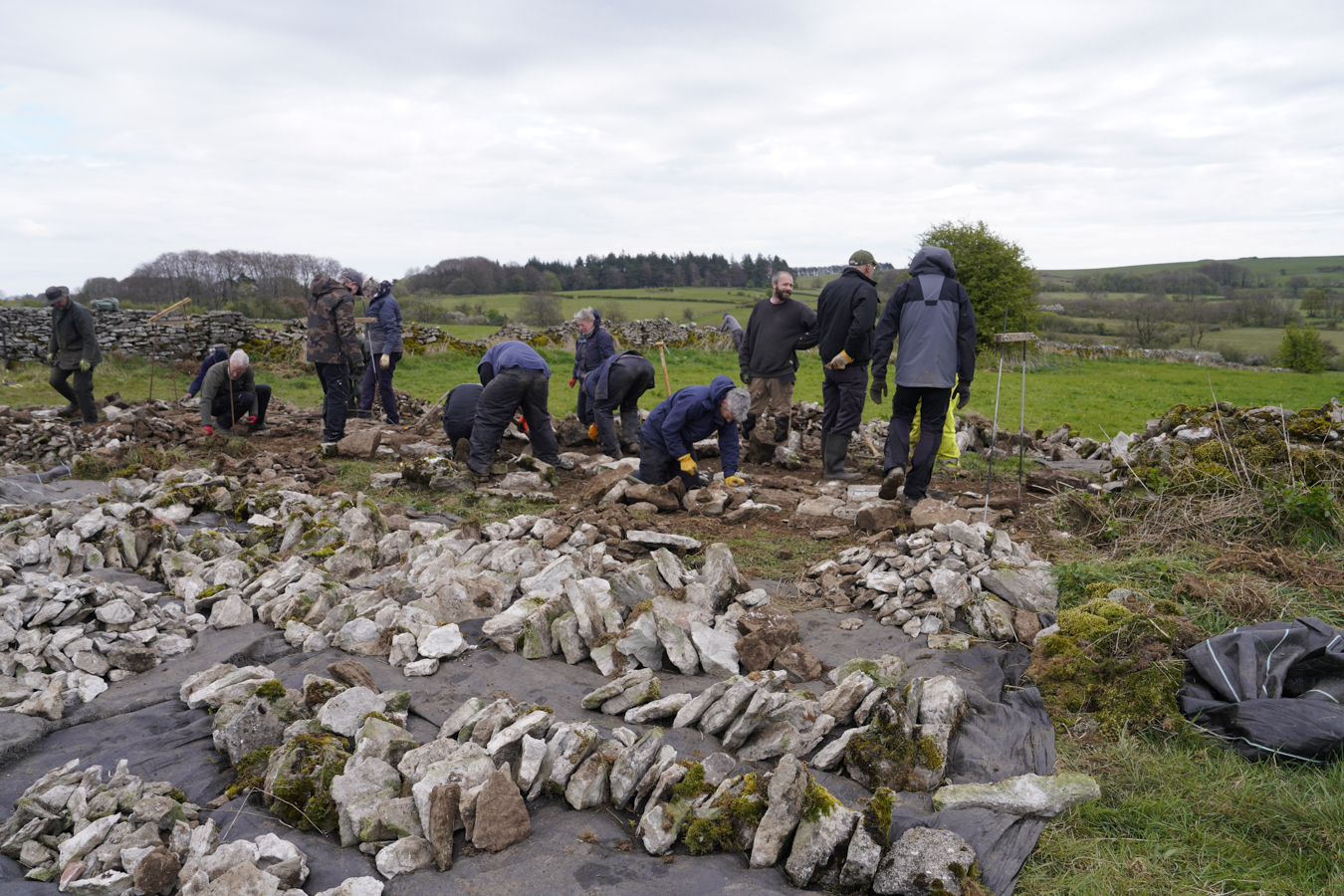
Walling is also a physical craft, with ‘touch’ being a central element as you work with the stone, not against it. The fact that a waller is likely to touch each stone twice – one in the de-construction and then in the subsequent rebulding – proves that it is a careful practice. It is powerful to think that the last person to touch the stone prior to rebuilding would likely be around two hundred years ago.
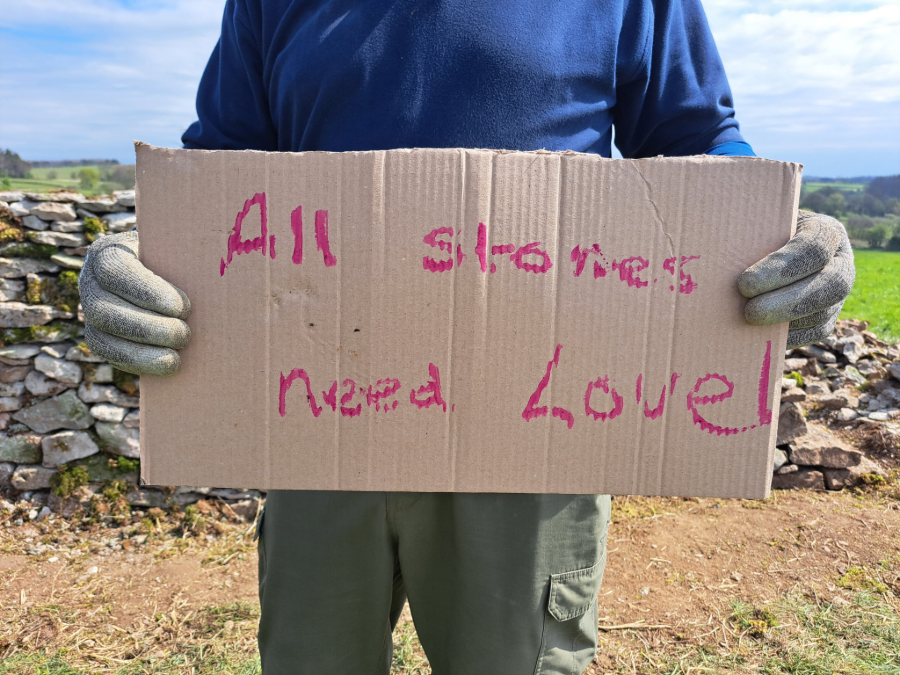
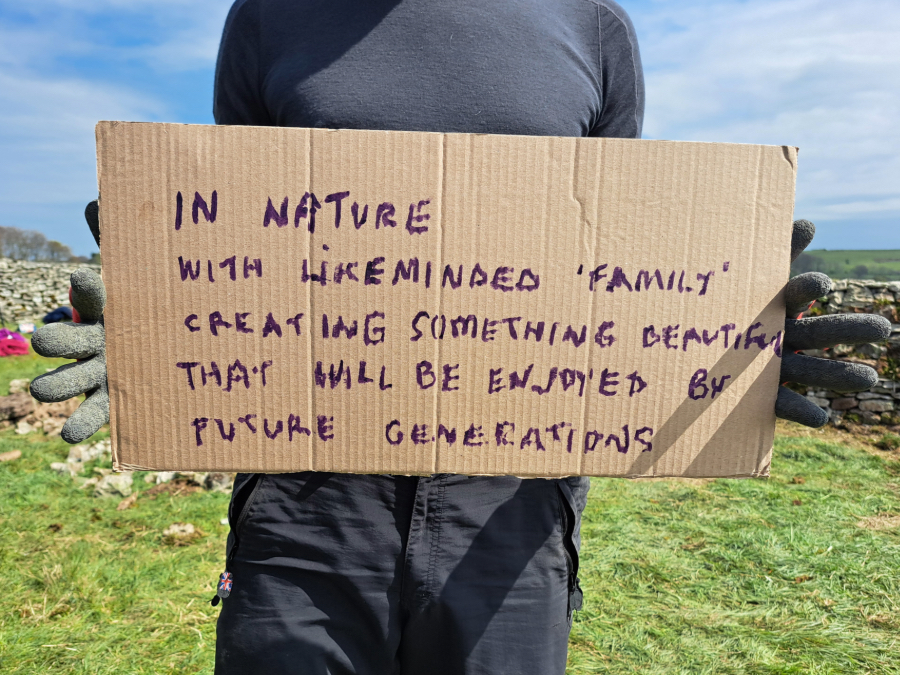
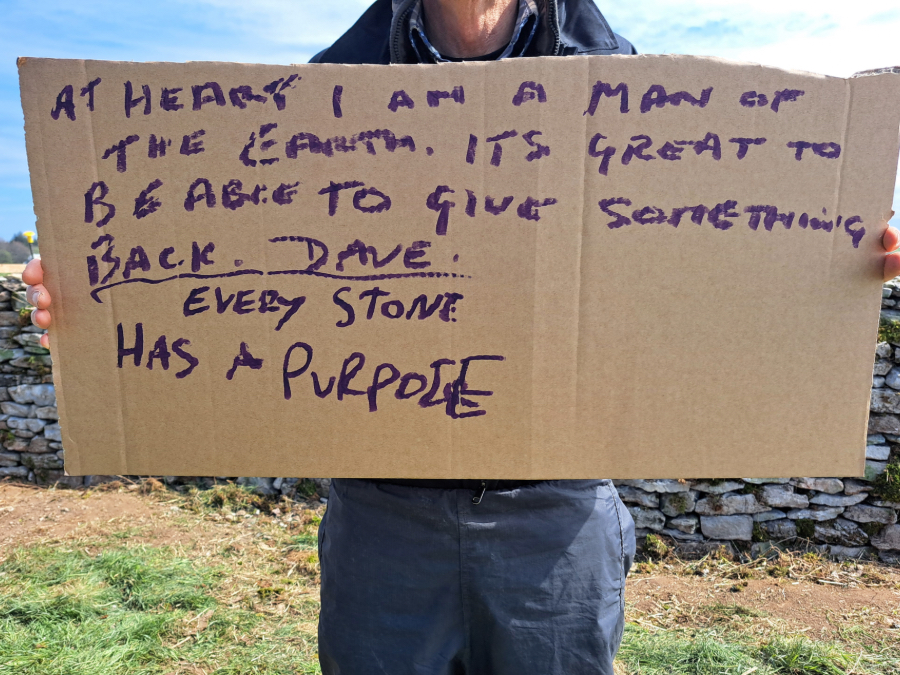
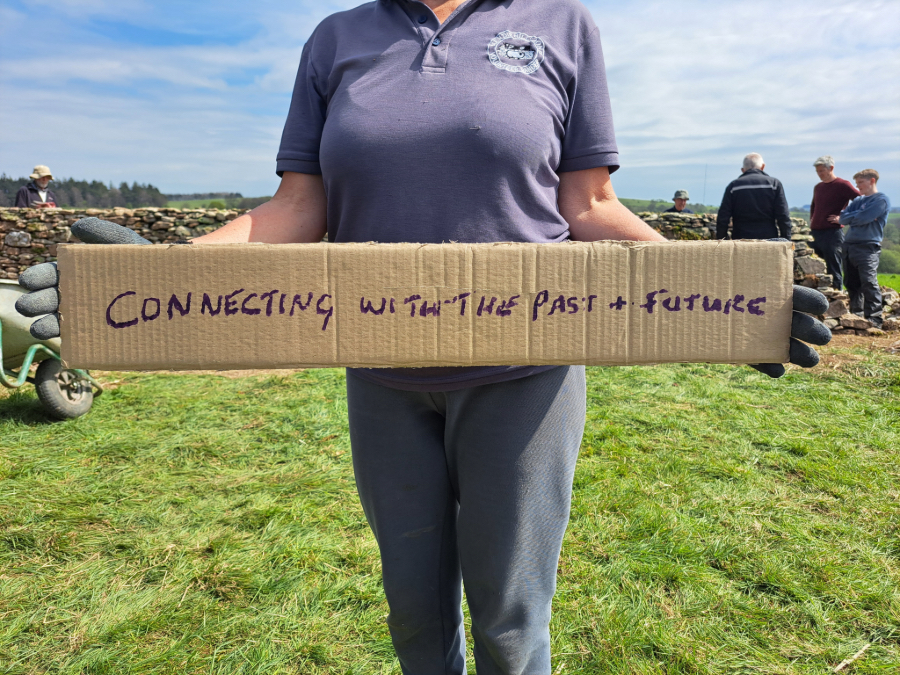
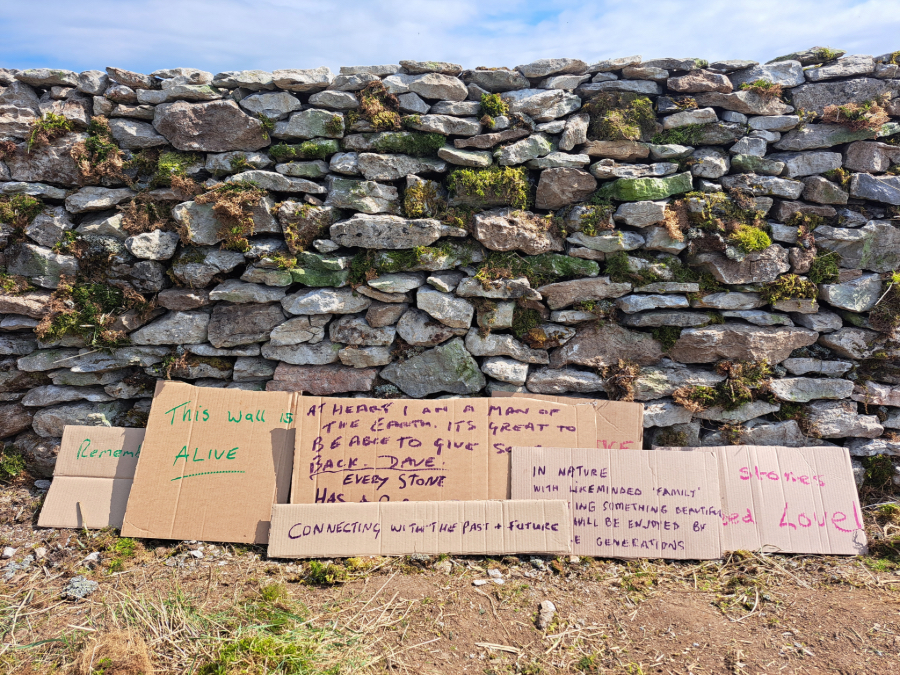
During a walling weekend with SWEDSWA (the South West Branch of the Dry Stone Walling Association) in April 2025, volunteer wallers and members were invited to create their own signs of care—personal reflections inspired by the craft of dry stone walling and the Mendip Hills landscape.
Explore the resulting signs in this fragment.
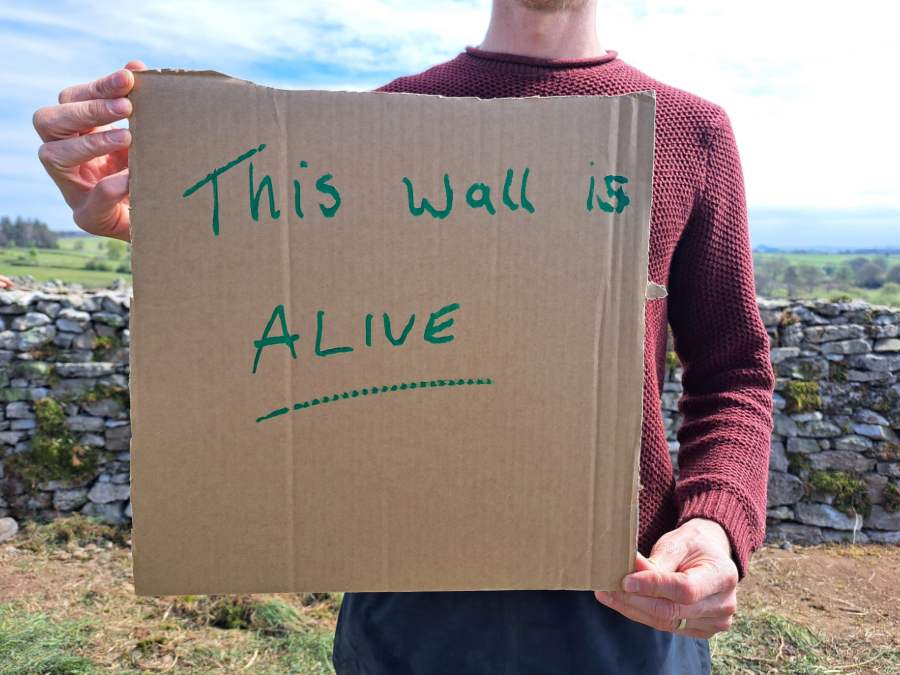
‘This wall is alive’
‘At heart I am a man of the earth. It’s great to be able to give something back.’
‘Every stone has a purpose’
‘All stones need love.’
‘Connecting with the past and future’
Future Heritage
Future heritage and the craft of dry stone walling
‘Landscape is in a constant state of becoming’
– Doreen Massey, Social Geographer
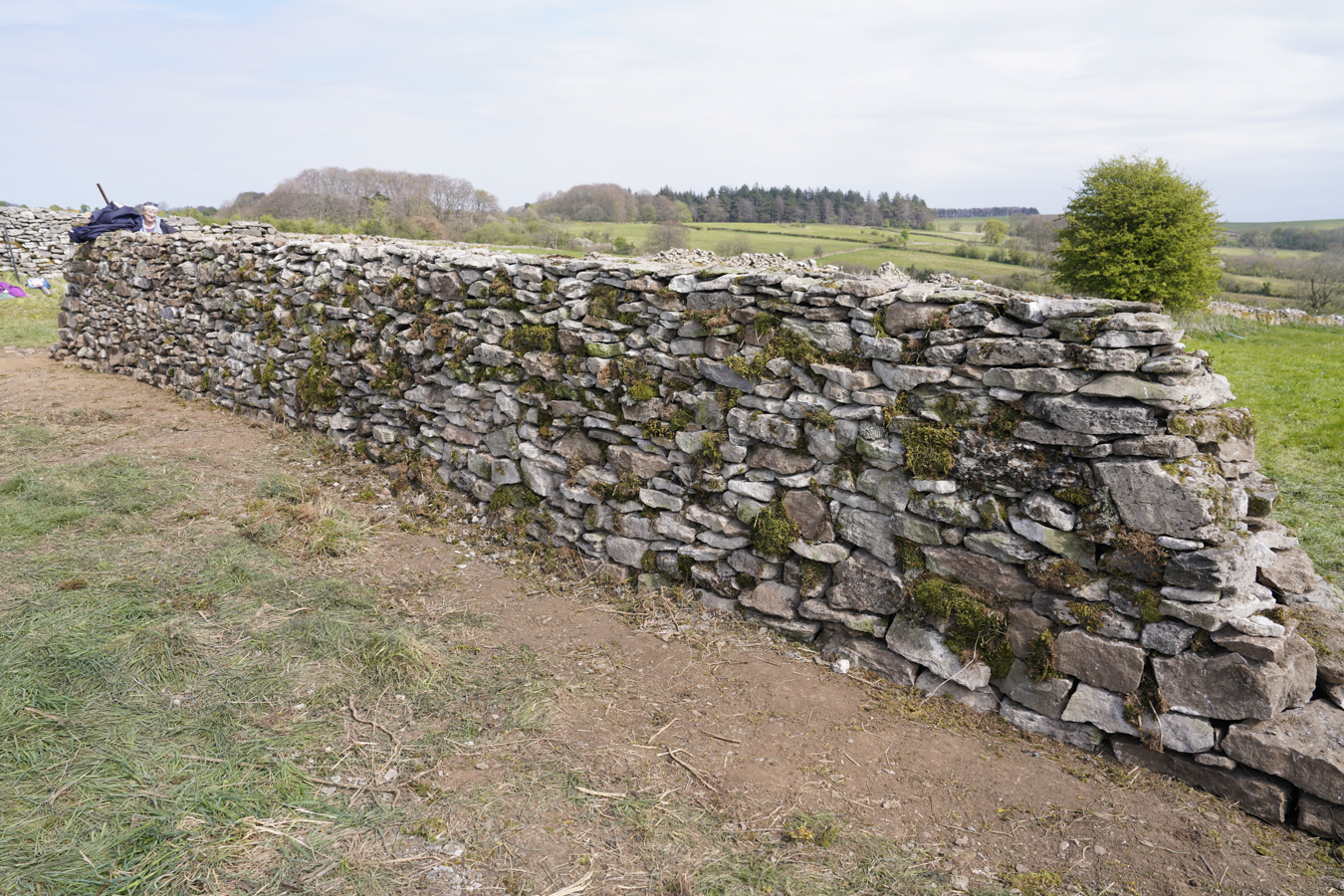
The craft of dry stone walling in the Mendip Hills is more than a traditional rural skill—it is an evolving practice that bridges past, present, and future. As both a cultural and ecological asset, these walls represent centuries of local knowledge, labour, and relationship to the land. Yet their continued relevance lies in how they are adapted and cared for today. In the context of future heritage, dry stone walling becomes a living tradition—one that must be actively sustained not only to preserve its historical value, but to support biodiversity, community identity, and climate resilience. Every rebuilt wall is not just a repair of the past, but a conscious investment in the landscapes and livelihoods of tomorrow.
Intangible heritage – the knowledge behind the stones
‘You don’t need many tools to build a wall.
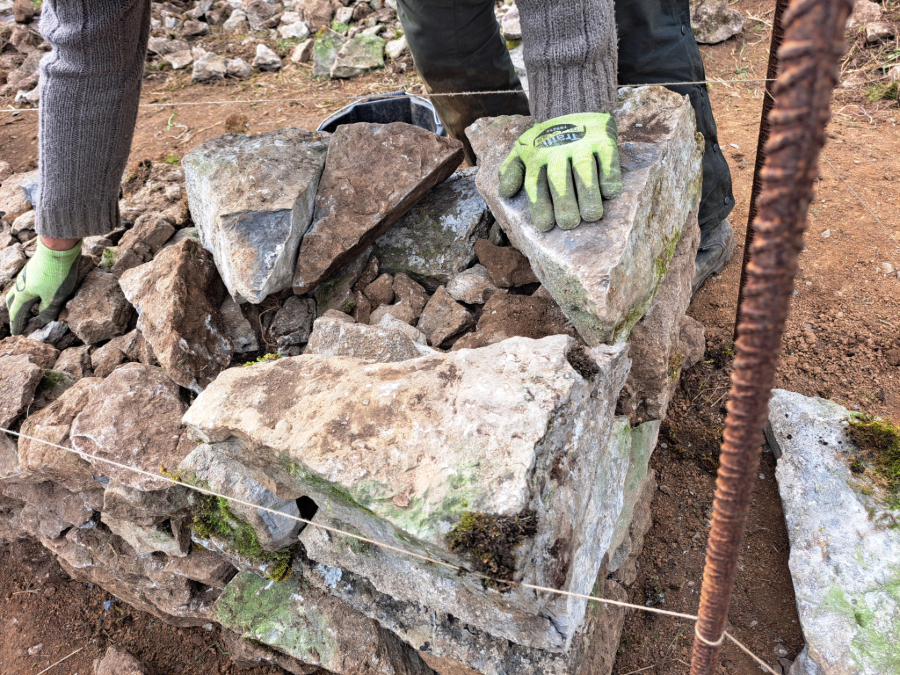
I have a mattock and a pick to dig to the buried stone and foundation trench strong lines, a wooden batter frame or metal pins with a bar to give a profile for the new wall, a bucket for the hearting, a hammer to shape the stone – although I don’t use it much on the Mendips – and a pair of stout boots.’
– Dry Stone Waller, Mendip Hills
This living knowledge, often shared through hands-on learning and community practice, is recognised as intangible cultural heritage. In the Mendip Hills, wallers bring not only craftsmanship but a deep understanding of the land, weather, and materials, shaping each wall with care and local insight. Preserving this intangible heritage means valuing the people who keep the practice alive, listening to them and ensuring their skills continue to be taught, shared, and respected into the future.
‘Since a very large proportion (of dry stone walls) are in a poor state, the landscape impact of their future decline could be very significant.The rate of wall loss would be expected to accelerate if the condition of walls continues to worsen.’
– The Condition of England’s Dry Stone Walls. Countryside Commission, 1996.
Recognisd by UNESCO as Intangible Cultural Heritage of Humanity, dry stone walling is not just about stone – but story, skills and ultimately, care.
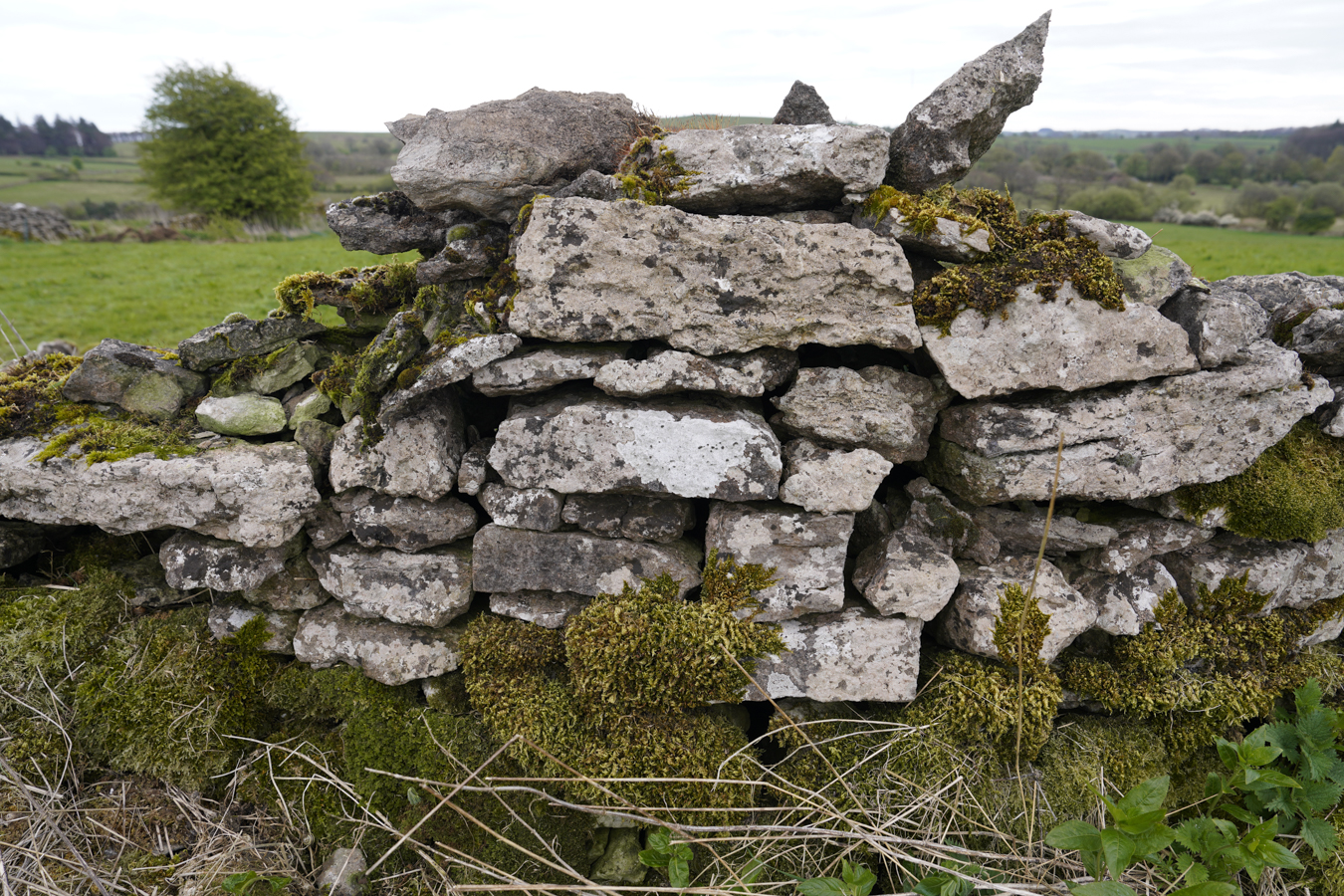
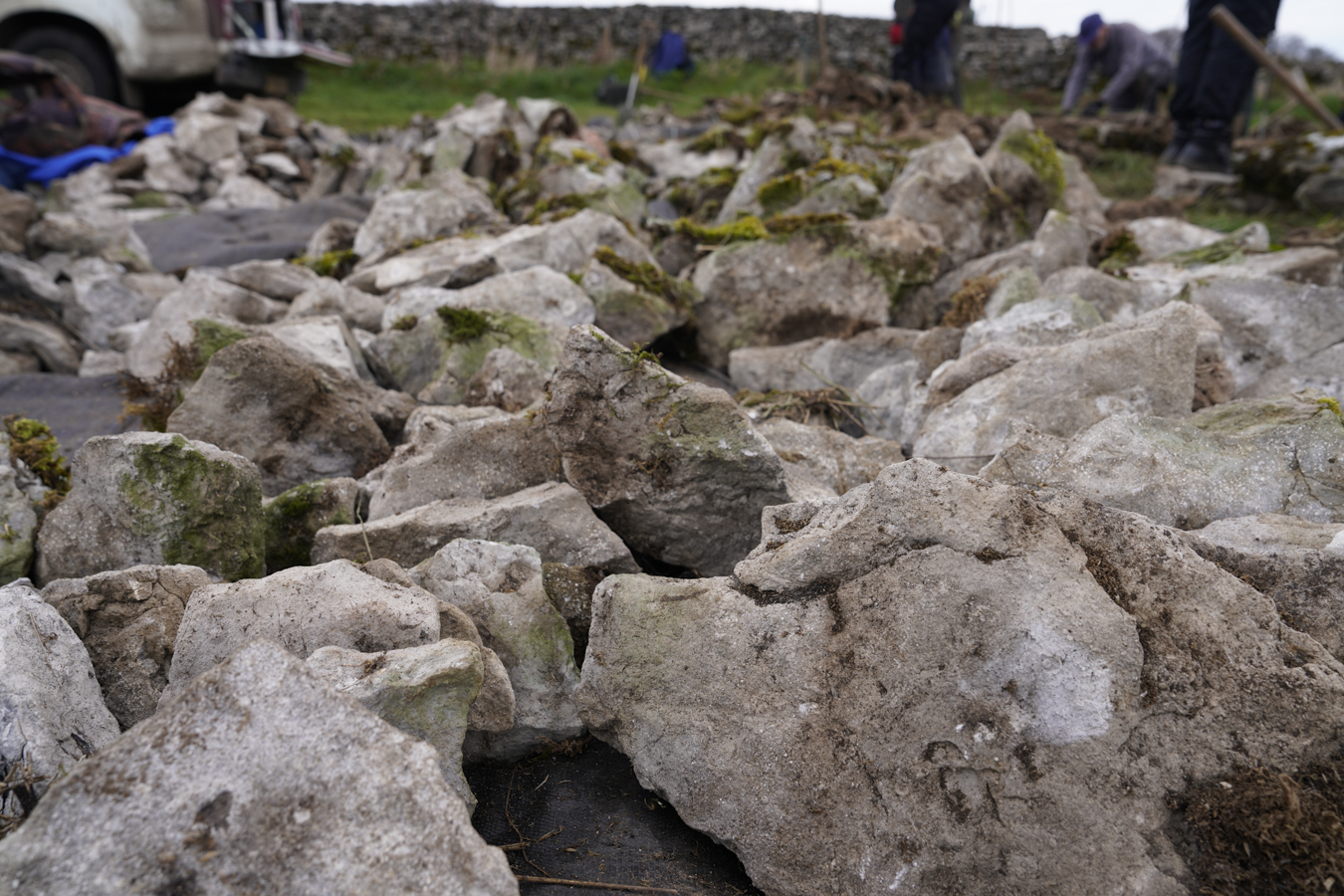
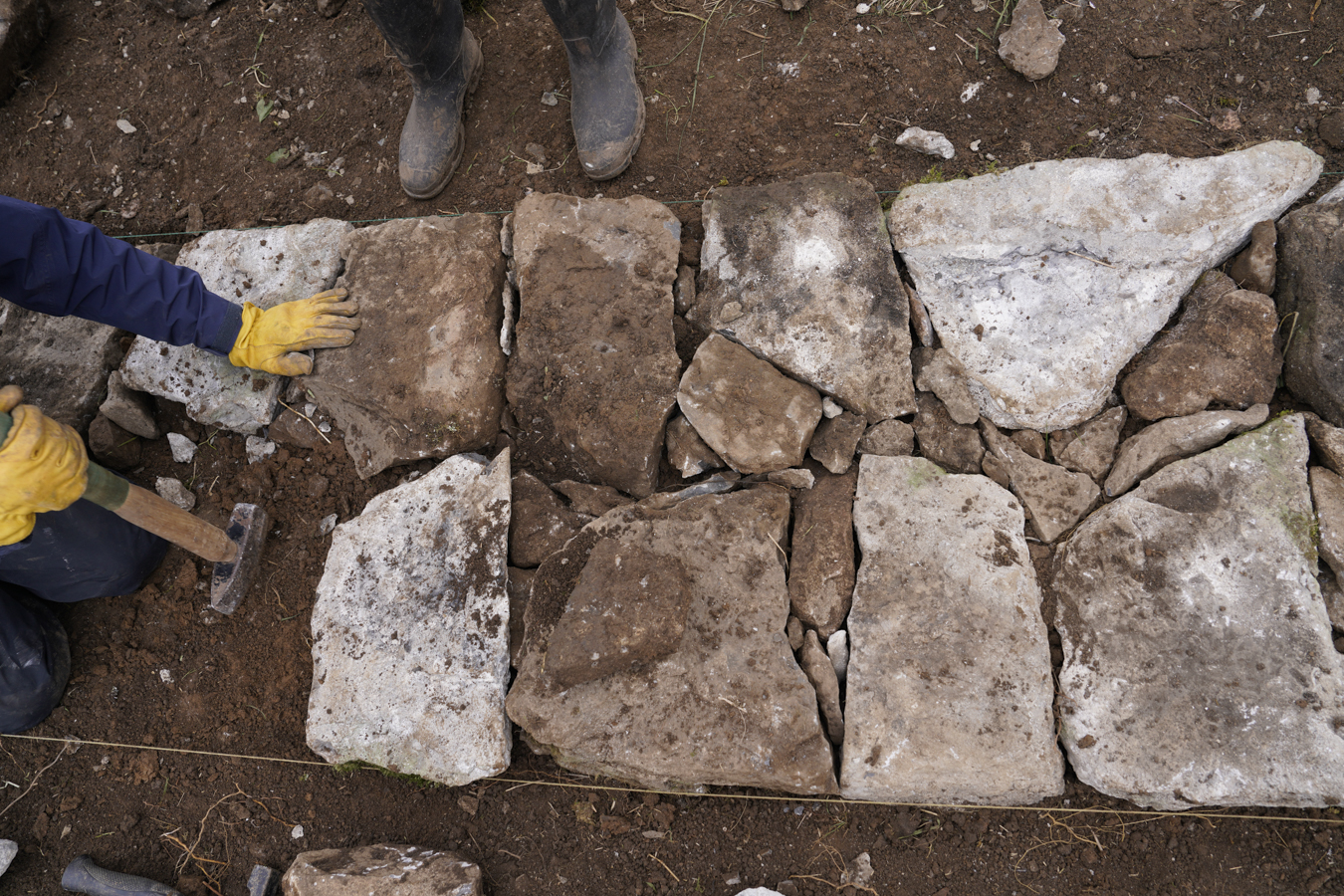
By documenting the transformation from collapsed walls to newly rebuilt ones through conversations with wallers, this fragment highlights the active, caring craft of dry stone walling in the Mendip Hills—drawing attention to the vital role of intangible heritage in shaping and sustaining the landscape.
‘Therefore, when we build let us think that we build forever. Let not be for present delight nor for present use alone. Let it be such work as our descendants will thank us for; and let us think, as we lay stone on stone, taught a time is to come when these stones will be held sacred because our hands have touched them, and that men will say, as they look upon our labour and wrought substance of them, “See, this our fathers did for us.”
– John Ruskin,
Seven lamps of Architecture, chapter VI The Lamp of Memory
Approaches To Repair
Approaches to repair
‘Neither technical progress nor man’s ingenuity have yet succeeded in coming up with a more harmonious, effective and long-lived boundary than a dry stone wall.’ – (DSWA Leaflet, 2006)
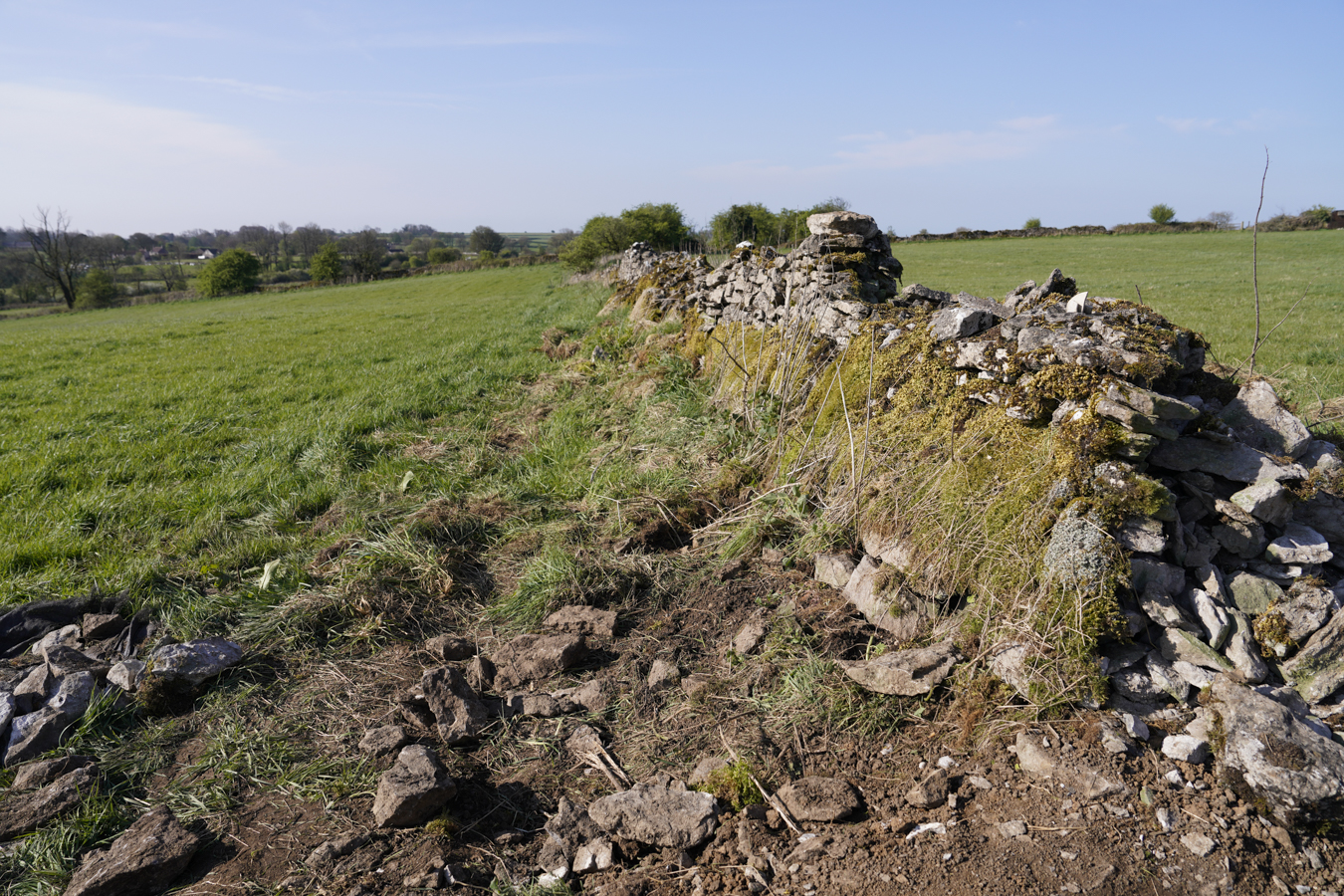
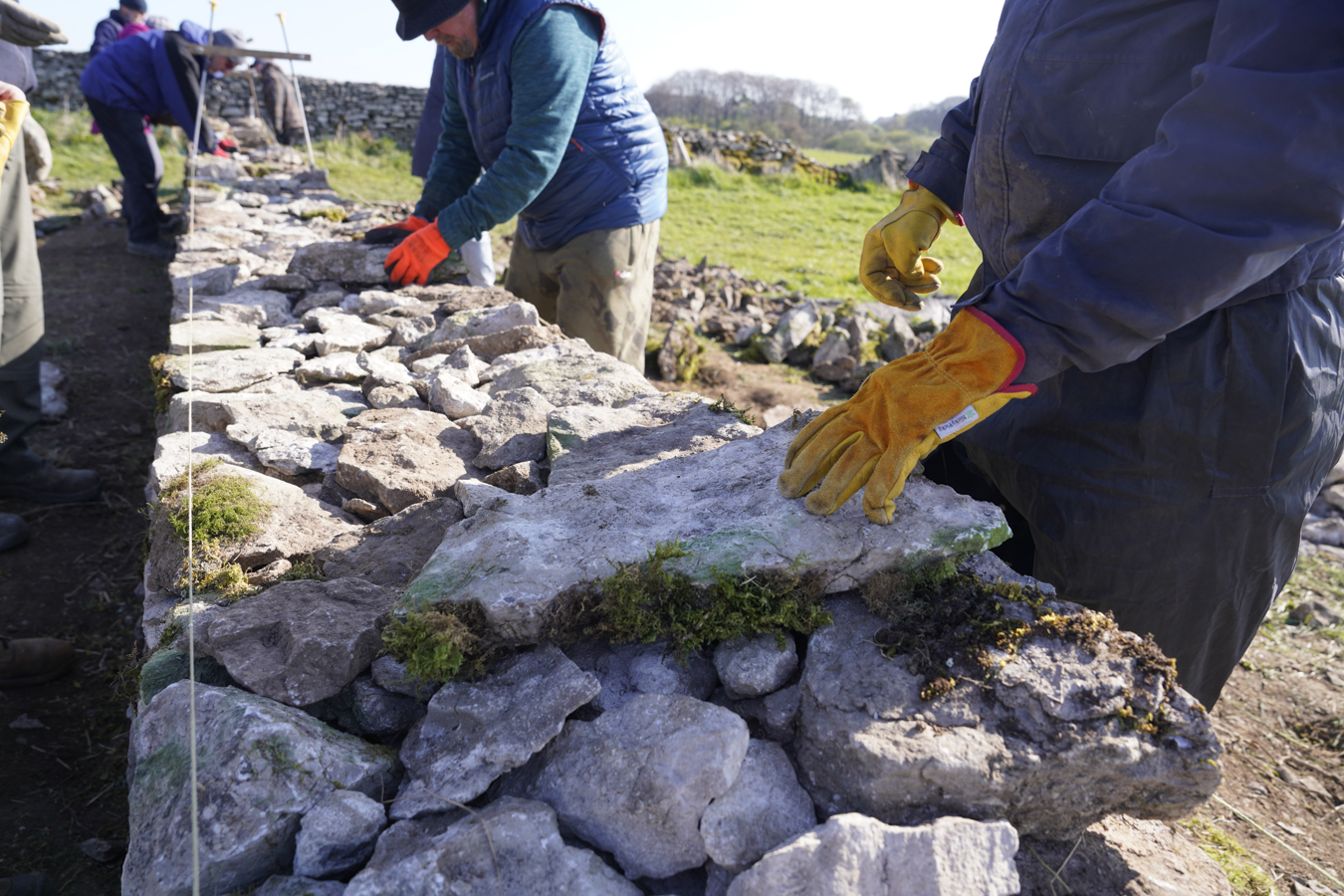
Dry stone walling in the Mendip Hills reflects a deep, generational knowledge of care and repair—shaped by tradition, technique, and personal philosophy. Whilst different groups, waller, ecologists, landowners and local councillors all share a commitment to preserving the landscape, their approaches vary: some focus on historical accuracy, others on ecological sensitivity, and some on speed and utility. These diverse perspectives offer a rich, textured view of what it means to care for a wall—and by extension, for a place.
As the project develops and more voices and perspectives are heard, this fragment will explore, share and celebrate those contrasts, inviting reflection on the many ways care is expressed through the craft.
Moss & Lichen
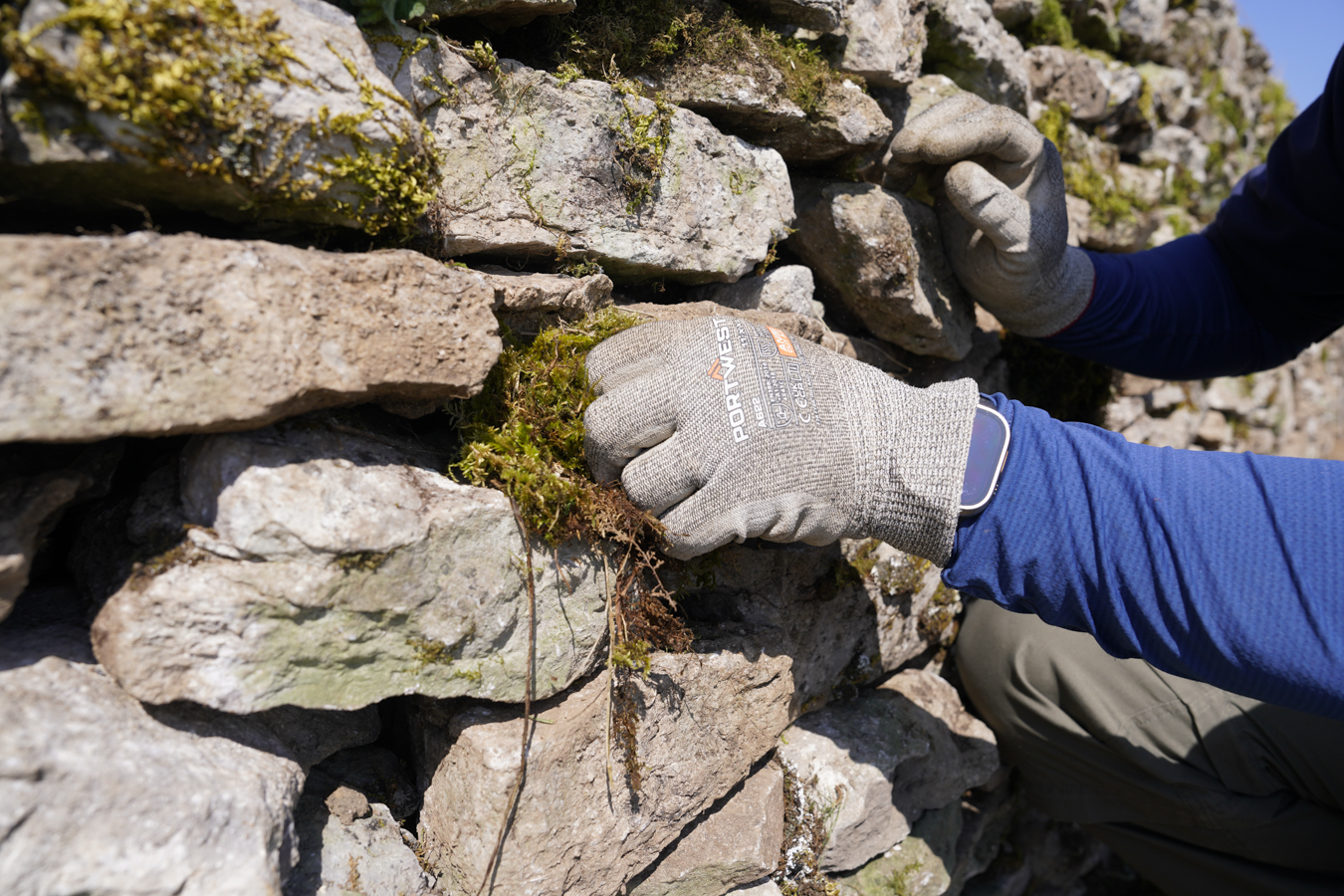
Moss, Lichen, and Biodiversity in the Mendip Hills
‘I put the moss back’ – Dry Stone Waller, Mendip Hills
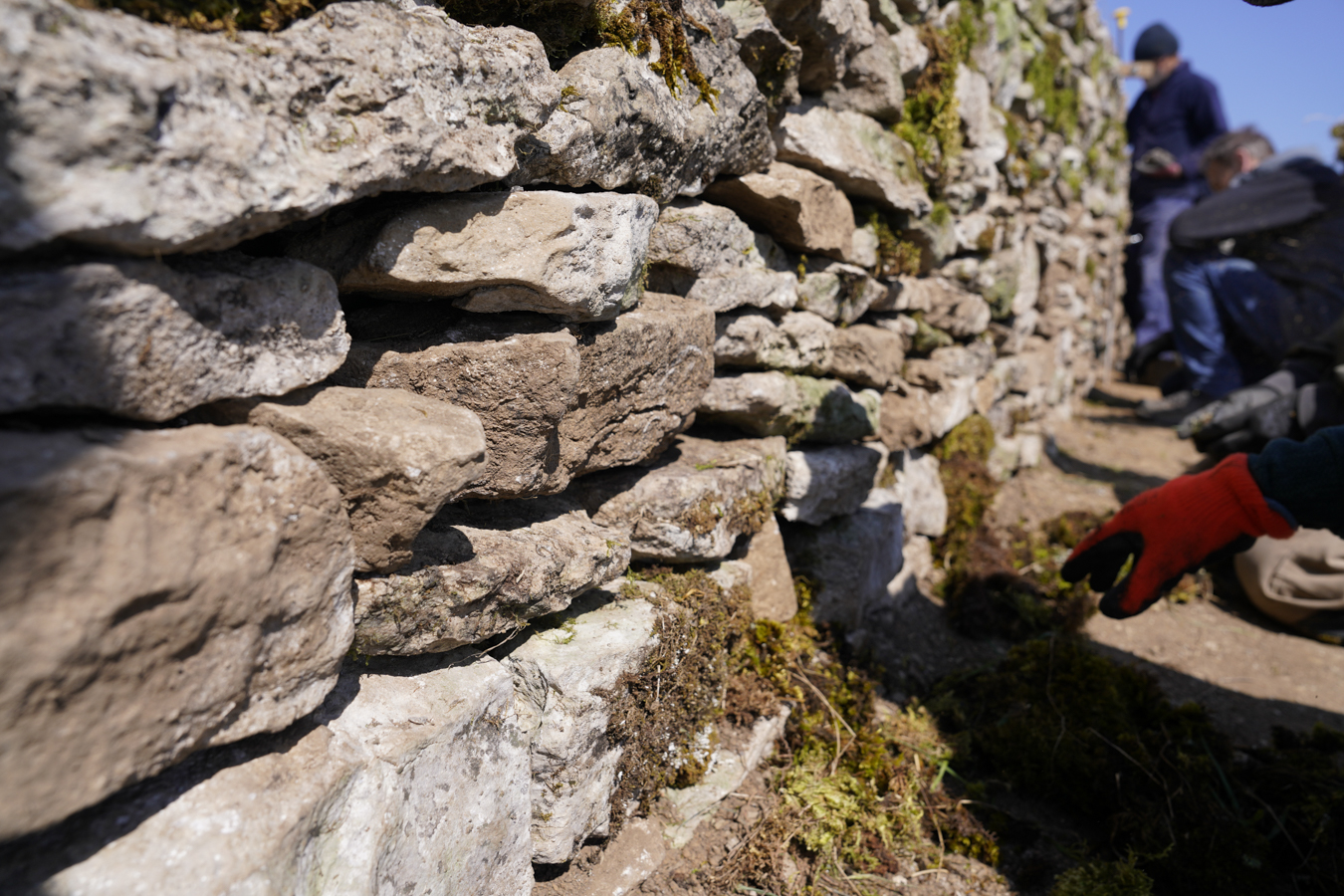
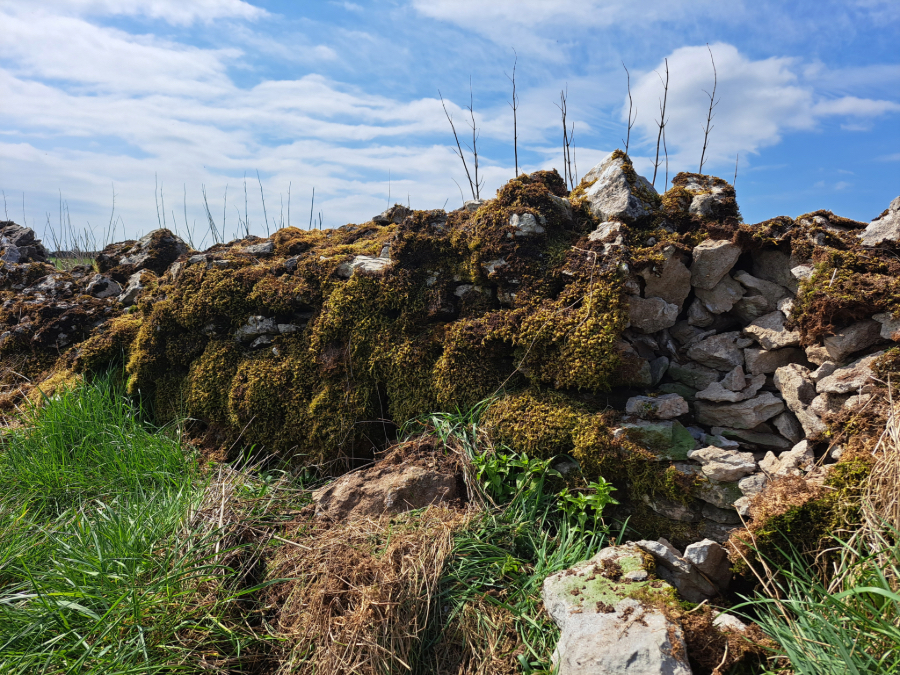
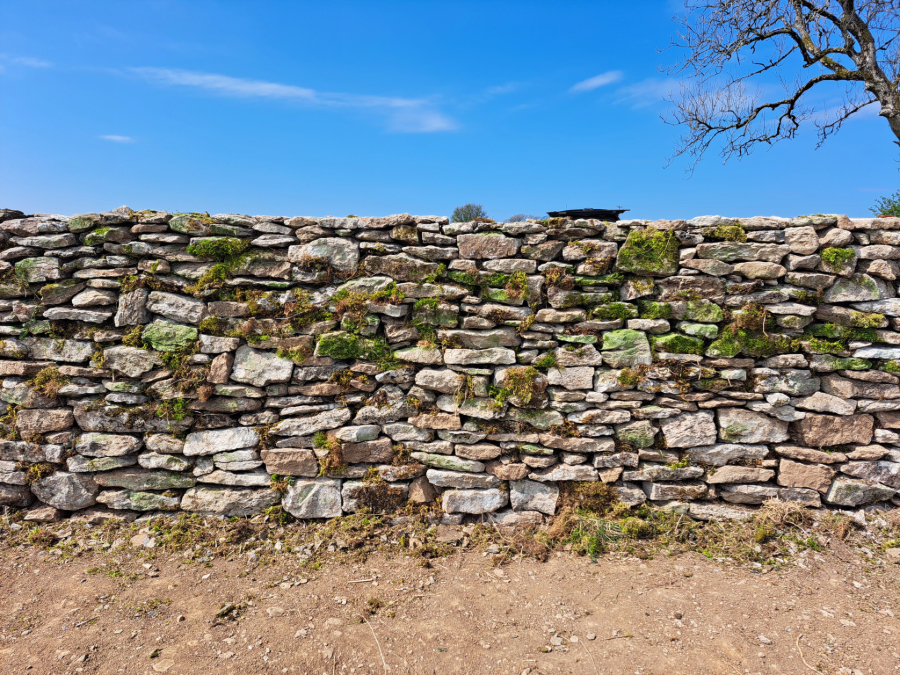
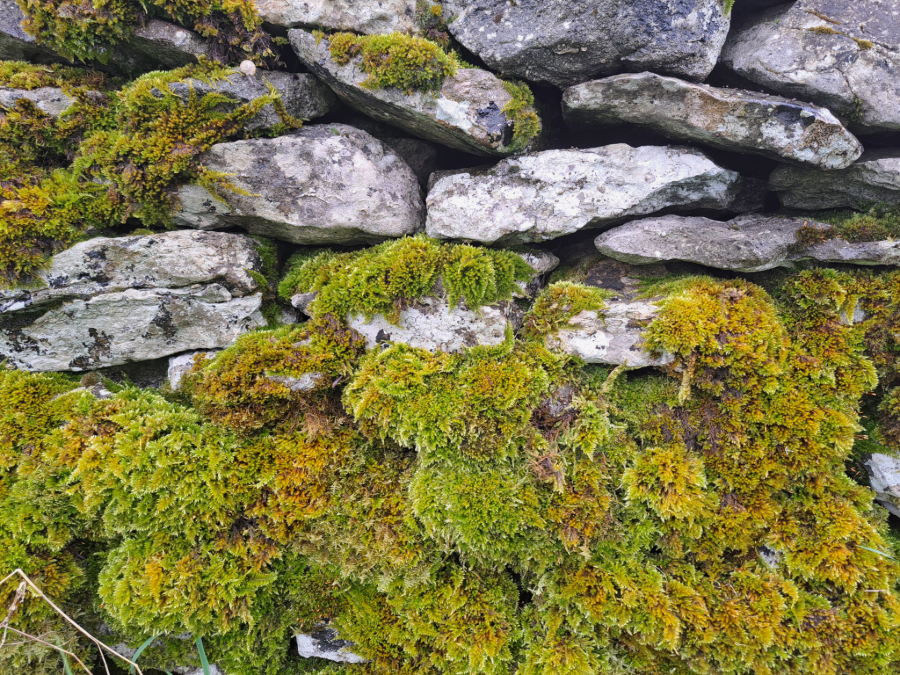
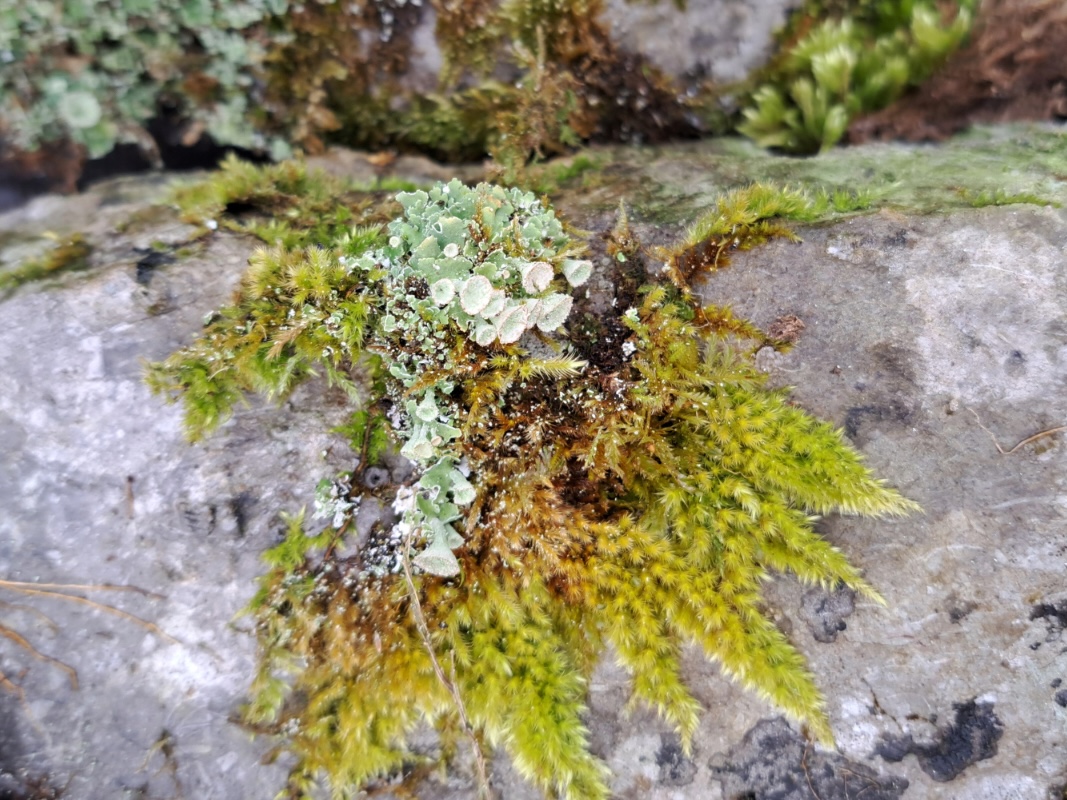
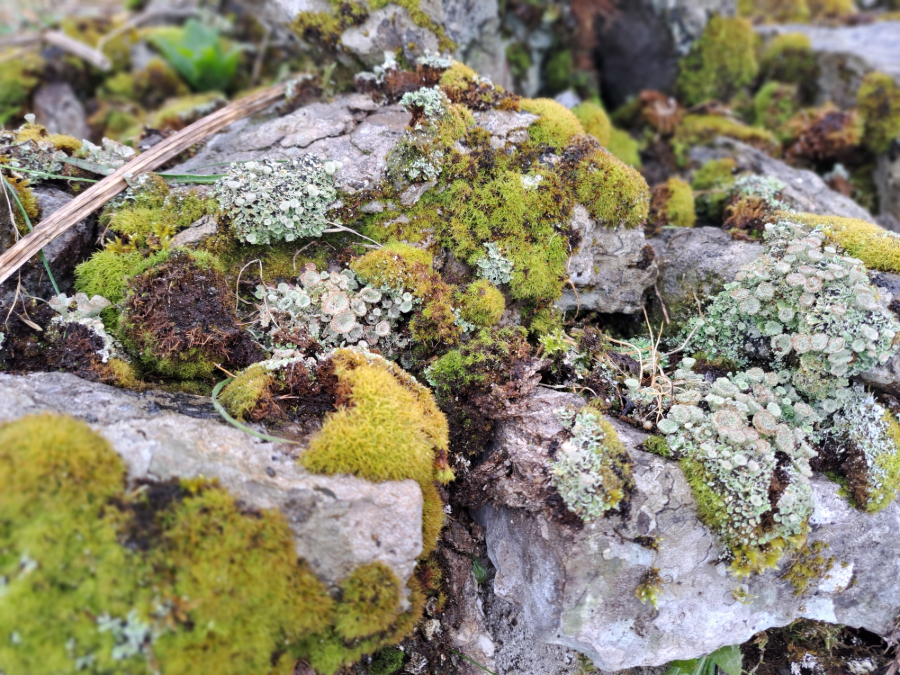
Dry stone walls in the Mendip Hills are more than historic landscape features—they’re thriving habitats. Over time, these walls become host to a rich tapestry of mosses and lichens, which anchor themselves in the tiny crevices between stones. These slow-growing organisms are not only indicators of clean air and ecological health, but also provide shelter and food for a variety of insects, birds, and small mammals. The layered structure of the walls creates microclimates and hiding spaces, supporting a diverse web of life. In this way, dry stone walls play a vital role in local biodiversity, quietly sustaining ecosystems while standing as markers of human care and craftsmanship.
This fragment celebrates the vibrant colours and textures of the moss and lichen found on the Mendip Hills walls throughout the course of this project, creating a space to really take time to consider the beauty and value in the ecosystems that live between the gaps.
‘Only when we appreciate things as their stories can we begin to correspond with them’
– Tim Ingold (Ingold, Correspondences, 2020)
The limestone of the Mendip Hills is rich in Carboniferous-age fossils, dating back around 350 million years. As wallers carefully repair and care for these walls, many fossils are found, markers of the marine animals and corals found in Mendips in another time.
‘You often find fossils from the old sea bed in the stone, like coral, shells and worm tubes. I like to place them in the wall where they can be seen.’
– Dry Stone Walling member, SWEDSWA
Share Your Story
Share Your Story
Dry stone walling is an ancient craft built on care—care for land, for materials, and for the skill passed from hand to hand. As part of this ongoing project, we’re inviting you to share your own stories of care and repair, inspired by or connected to this tradition.
Have you repaired a wall, restored a boundary, or witnessed a quiet act of stewardship in the Mendip Hills? Whether you’re a waller, ecologist, landowner, councillor, or someone with a deep connection to this place, we’d love to hear from you.
Stories can be shared as text, images, audio, or a simple reflection. Submissions will remain anonymous unless you choose to share your name and location.
Share your sign of care in the box below and help shape the next phase of the project.

Time to start Making Conversation
England
